 Vanitiro Editorial Team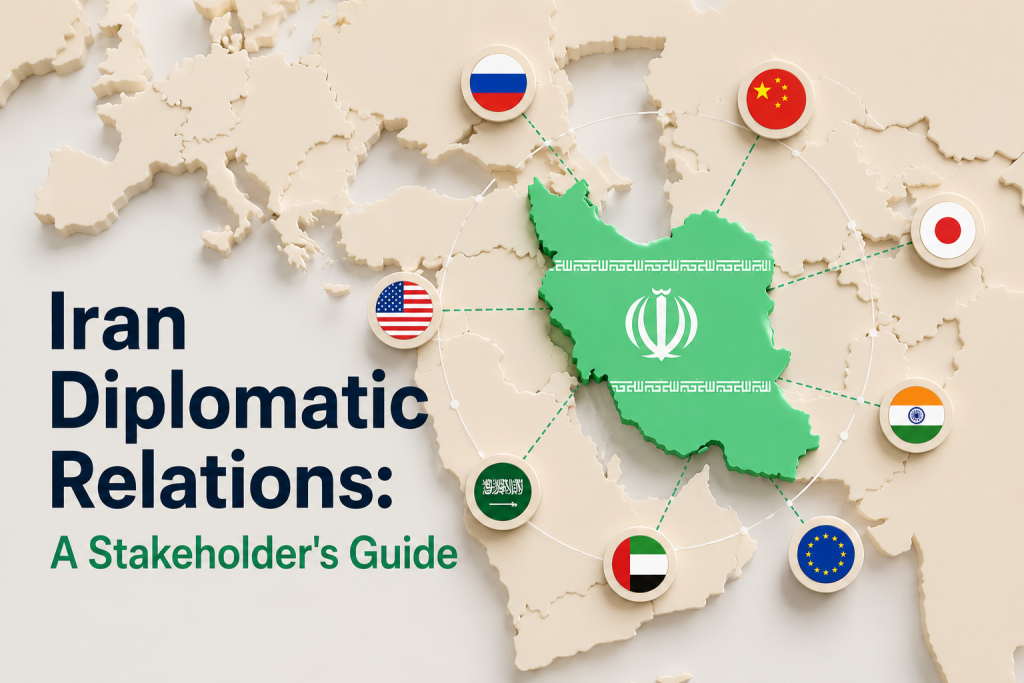
A tanker transits the Strait of Hormuz under naval escort. Hours later, Iranian officials are in talks with Gulf intermediaries while Beijing and Moscow weigh their own interests. That contrast captures the core reality of iran diplomatic relations: coercion and diplomacy often move together, not in sequence.
For policymakers and market watchers, that means bilateral analysis is rarely enough. Tehran's posture toward Washington affects Gulf shipping risk. Its ties with Saudi Arabia shape the negotiating climate around sanctions. Its links with Russia and China alter how much pressure Western states can impose.
Table of Contents
- Introduction The Tangled Web of Iranian Diplomacy
- The Historical Roots of Iran's Strategic Worldview
- Who Decides Iran's Foreign Policy
- The Enduring Standoff with the US and Europe
- The Strategic Pivot to Russia and China
- Navigating a Turbulent Neighborhood
- How Diplomacy and Sanctions Drive Global Markets
- Outlook for 2026 Three Scenarios for Stakeholders
Introduction The Tangled Web of Iranian Diplomacy
Iran doesn't conduct foreign policy on separate tracks. It plays one board. A move toward Riyadh can improve its bargaining position with Washington. A security signal by the IRGC can shape how Gulf capitals calculate risk. A commercial relationship with China can blunt the force of Western sanctions without removing them.
That is why iran diplomatic relations matter beyond diplomacy specialists. Energy traders watch them because Gulf stability affects shipping, insurance, and oil pricing. Governments watch them because Iran's actions sit at the intersection of sanctions policy, nuclear diplomacy, regional deterrence, and proxy conflict.
The standard mistake is to treat Iran's ties with the United States, Europe, Russia, China, and the Gulf as separate files. They aren't. Tehran uses each relationship to offset vulnerabilities in the others.
Core judgment: Iran's diplomacy works less like a set of bilateral negotiations and more like a pressure-balancing system. If one front tightens, Tehran looks for relief or leverage on another.
That system has deep roots. Iran's modern posture reflects historical losses, major political rupture, institutional centralization, and a regional strategy built around both deterrence and selective accommodation.
For clients trying to assess forward risk, the key question isn't whether Iran wants engagement or confrontation in the abstract. It is where Tehran believes it needs to secure an advantage, where it sees encirclement, and which actor inside the Iranian system is signaling in that moment.
The Historical Roots of Iran's Strategic Worldview
A century and a half before sanctions became the main tool of pressure on Tehran, Iranian rulers had already learned a harder lesson. Diplomatic recognition did not prevent territorial loss. Formal treaties often recorded defeat after the balance of power had already turned against Iran.
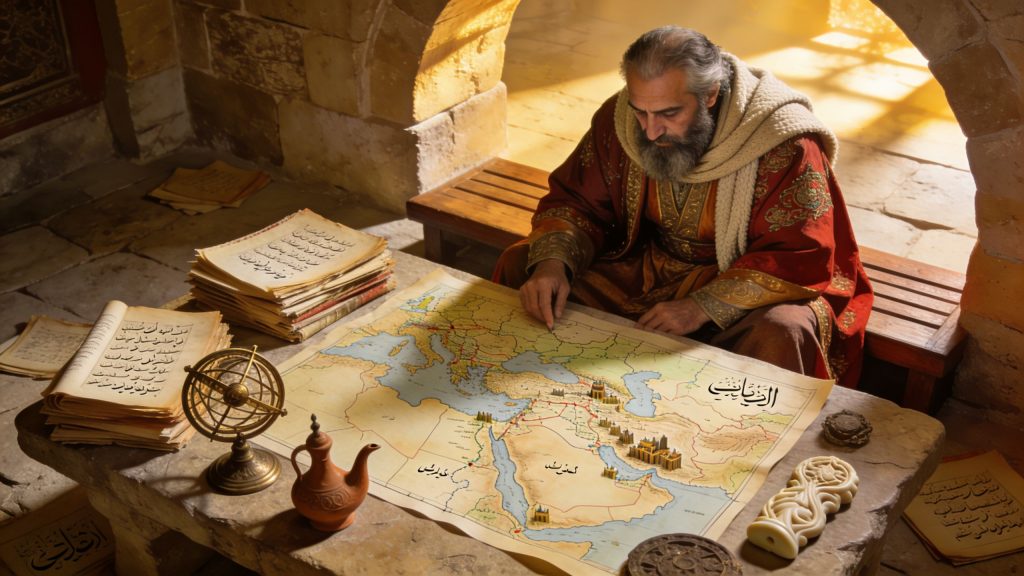
That memory still matters. It helps explain why Tehran reads foreign policy as a single contest over regime security, borders, trade access, and deterrence rather than as separate files.
Borders lost and memory retained
The nineteenth century shaped that view. Defeats by imperial Russia produced the Treaty of Gulistan (1813) and the Treaty of Turkmenchay (1828), which stripped Iran of large parts of the Caucasus. The Treaty of Paris (1857) then forced Tehran to abandon claims over Herat. The Encyclopaedia Iranica entry on boundaries traces how these settlements redrew Iran's frontiers under external pressure.
Inside the Iranian system, those episodes became more than history. They formed a durable strategic assumption that weak military and economic positioning invites coercive diplomacy, and that negotiations can formalize losses if Iran enters them from a position of dependence.
That logic still shapes priorities today. Tehran puts unusual weight on deterrence, strategic depth, and the ability to absorb sanctions because policymakers see these as protections against a repeat of earlier periods when outside powers dictated outcomes.
A short table captures the pattern:
| Historical episode | Strategic effect on current thinking |
|---|---|
| Gulistan | Lasting suspicion of northern pressure and border changes |
| Turkmenchay | Acute sensitivity to sovereignty, hierarchy, and imposed settlements |
| Paris | Persistent concern about vulnerable eastern approaches and external intrusion |
Why this still matters to current policy
This history helps explain why Iran links distant issues that outside observers often separate. Nuclear negotiations, Gulf maritime security, trade corridors through the Caucasus, and ties with Russia and China all connect back to the same question inside Tehran. How can Iran reduce exposure to coercion by stronger states?
That is the market implication as well as the diplomatic one. If Iranian leaders view commercial dependence as a security risk, they will keep seeking alternative payment channels, logistics routes, and political cover from non-Western powers even when limited openings with the West appear. A shift with one actor therefore changes the value of every other relationship on the board.
The same historical frame also sharpens Iran's sensitivity around frontier disputes and buffer zones, including the Caucasus, Afghanistan, and the Gulf. Tehran's recurring instinct is to push threats away from its core territory. That is not only an ideological reflex after 1979. It is also a state tradition shaped by repeated experience with encroachment.
For policymakers and investors, the point is practical. Iranian officials often judge proposals less by their technical merits than by whether they increase dependence, reduce deterrence, or expose a flank. Deals that ignore that hierarchy can look reasonable in Western capitals and still fail in Tehran.
Who Decides Iran's Foreign Policy
A foreign minister may be the public face of Iranian diplomacy, but the decisive meetings often happen elsewhere. In Tehran, the question is not who speaks to the world. It is who sets the limits within which any diplomat can speak.
The formal state is only part of the picture
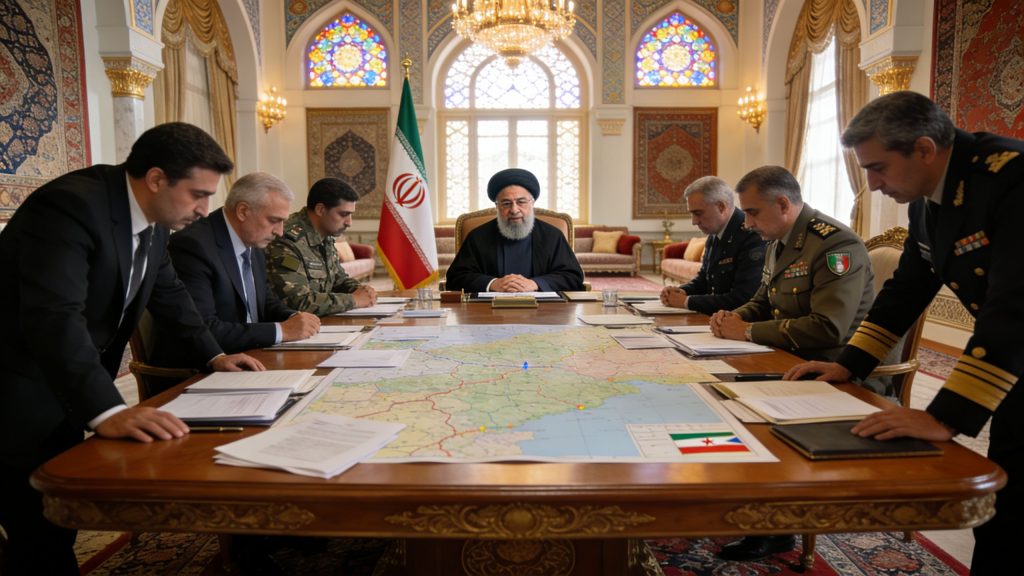
Iran's foreign policy works through overlapping centers of power. The presidency and Foreign Ministry handle state-to-state communication, but strategic choices are shaped by the Supreme Leader, filtered through the Supreme National Security Council, and influenced heavily by the Islamic Guard Corps. As noted in the Middle East Council analysis of Iran's evolving foreign policy structure, that structure has become more centralized and more security-led over time.
The practical effect is clear. Diplomacy, deterrence, proxy activity, missile signaling, sanctions management, and nuclear bargaining are not separate files inside the system. They are parts of one negotiating framework. A message sent through the Foreign Ministry may be reinforced, limited, or contradicted by actions from the IRGC or by guidance from the security apparatus.
That matters because outside governments and investors often misread the messenger for the decision-maker. A polished statement from Tehran can signal tactical flexibility without indicating any shift in core policy. The real test is whether military posture, regional partner activity, and sanctions workarounds move in the same direction.
One way to read the system is to track four layers:
- The Supreme Leader sets strategic boundaries: Relations with Washington, tolerance for escalation, and nuclear red lines sit at this level.
- The Supreme National Security Council integrates policy: It links military, intelligence, diplomatic, and domestic security priorities into a single state position.
- The IRGC establishes its advantage: Its regional networks and coercive tools give Tehran bargaining power that diplomats alone do not control.
- The Foreign Ministry executes and explains: It carries proposals, manages embassies, and handles formal talks, including at the UN channels that structure Iran's diplomatic options.
For clients watching risk, the conclusion is straightforward. Iranian foreign policy is best read as a coordinated system, not a set of competing press statements. If coercive signals rise while diplomatic rhetoric softens, Tehran may be strengthening its hand before a negotiation rather than losing control of events.
This also explains why Iran's relationships with the United States, China, Russia, and the Gulf cannot be assessed in isolation. A sanctions negotiation affects oil flows to Asia. A regional militia escalation changes Gulf shipping risk and insurance costs. A tighter security relationship with Moscow can strengthen Tehran's bargaining position with Europe while increasing dependence on China for trade and payments. The decision-making structure inside Iran links these files before outsiders do.
For markets and policymakers, headlines are often late. Personnel changes at the Foreign Ministry matter less than shifts in security coordination, enforcement patterns, and the regime's reading of threat and opportunity.
The Enduring Standoff with the US and Europe
A tanker transits the Gulf, a European bank reviews compliance exposure, and traders reprice crude before any formal statement is issued. That sequence captures the underlying structure of Iran's dispute with the United States and Europe. Diplomacy here is not an isolated political file. It is a system that links sanctions, shipping risk, payment channels, and alliance signaling across multiple theaters.
The rupture that still structures the relationship
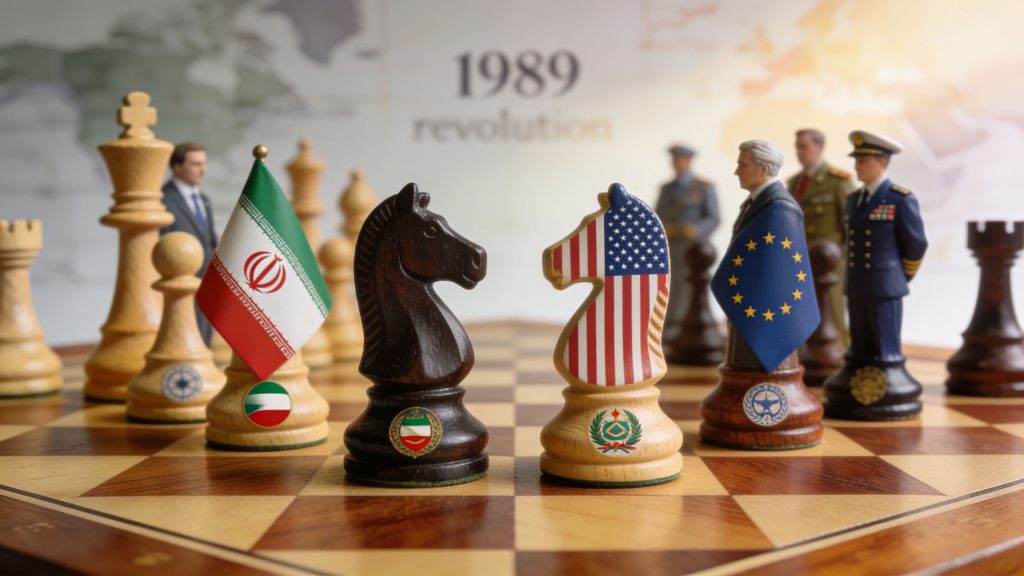
The conflict rests on a durable historical grievance, not a temporary policy dispute. The Ohio State University history of U.S.-Iranian relations traces the break from the 1953 coup against Mohammad Mossadegh, through the 1979 revolution and embassy hostage crisis, to the Algiers Accords that formalized the immediate end of that episode without repairing the underlying distrust. Those events still shape elite thinking on both sides.
In Tehran, the lesson was clear. Reliance on Western finance, diplomatic access, or security understandings can be turned into pressure at moments of vulnerability. In Washington, Iran became associated with hostage-taking, coercion, and a pattern of using regional pressure to shift negotiations. Europe broadly shares the latter concern, even when it differs from the United States on tactics.
That history matters because it affects present-day bargaining behavior. Iran treats economic self-preservation as a security issue. The United States treats sanctions as a tool for changing Iranian behavior without accepting the costs of direct war. Europe often tries to preserve diplomatic space, but its firms and banks still operate inside a financial system shaped by U.S. enforcement power.
The result is a dispute in which memory affects market structure.
Why Europe matters even when Washington dominates
Washington remains the decisive actor because it can restrict dollar access, banking relationships, and the sanctions exposure that deters non-U.S. firms. Europe matters for different reasons. European governments can influence the diplomatic temperature, coordinate censure or restraint in multilateral forums, and shape whether Iran sees a path to limited de-escalation. For that institutional layer, this overview of UN channels that frame Iran's diplomatic options is a useful reference.
Still, Europe's commercial room for maneuver is narrower than its diplomatic rhetoric often suggests. European policymakers may support dialogue, but major firms will usually defer to U.S. sanctions risk, insurance constraints, and compliance costs. That gap between political intent and commercial behavior is one reason Tehran often views European mediation as tactically useful but economically insufficient.
A repeat pattern has emerged over time:
- A nuclear, regional, or maritime incident raises the cost of inaction.
- Indirect talks reopen because escalation threatens both sides.
- Technical progress runs into disputes over sequencing, verification, or guarantees.
- Domestic politics in Iran, the United States, or Europe weakens implementation.
For policymakers, the main point is credibility. For markets, the main point is transmission. Any sign of durable restraint can affect oil expectations, tanker insurance, shipping routes, and the willingness of Asian buyers and intermediaries to test enforcement boundaries. Any sign of renewed confrontation does the reverse, often before formal sanctions policy changes.
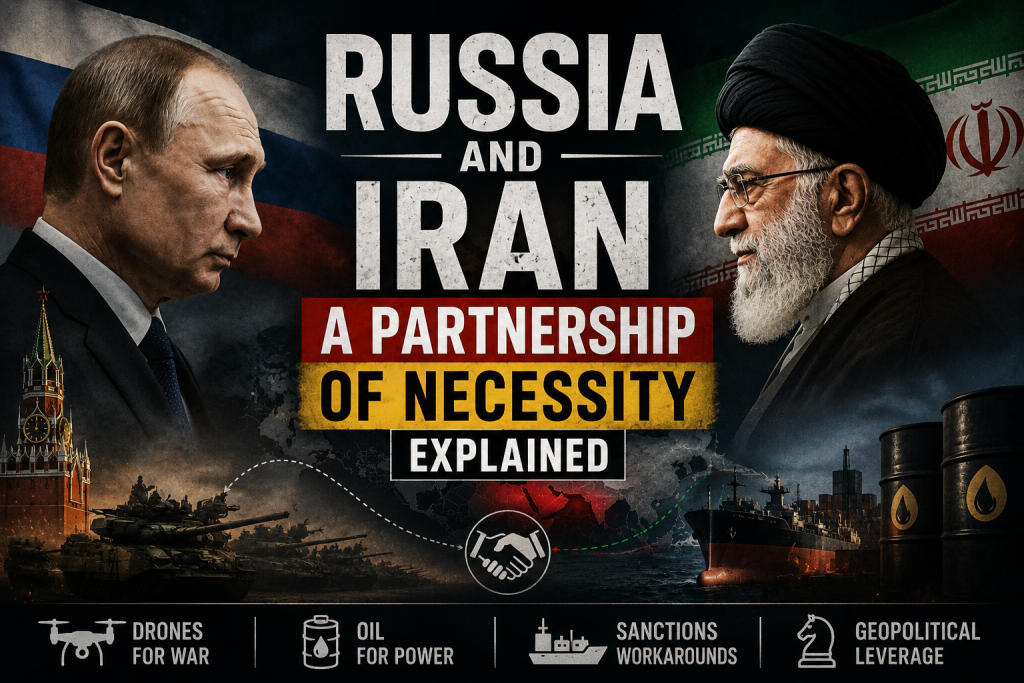
A visual explainer helps illustrate how this conflict keeps returning in different forms.
The broader conclusion is easy to miss if the file is viewed only through the nuclear issue. Iran's standoff with the United States and Europe also affects its bargaining position with Gulf states, its dependence on Chinese demand, and the value of visible security coordination with Russia. On this chessboard, pressure in one relationship changes the price of flexibility in the others.
The Strategic Pivot to Russia and China
Iran's turn east is often described as an ideological bloc. That is too neat. Tehran's relationships with Russia and China are both pragmatic, but they serve different functions inside the same survival strategy.
Russia offers strategic alignment not strategic trust
Russia matters to Iran primarily on the security side. The relationship is useful when both states want to weaken Western influence, preserve regional footholds, or complicate U.S. strategy. But that doesn't make it a stable alliance in the classic sense. Moscow and Tehran cooperate where interests overlap. They also keep room for divergence.
For Tehran, Russia offers three broad advantages:
- Diplomatic cover: Russia can complicate efforts to isolate Iran fully in international forums.
- Security coordination: Shared theaters and overlapping adversaries make tactical cooperation possible.
- Negotiating advantage: Visible alignment with Moscow can remind Western governments that pressure on Iran has wider geopolitical consequences.
The limitation is just as important. Russia is not a charity, and it is not a guarantor of Iranian interests. Tehran knows that Moscow bargains transactionally.
China gives Iran economic room to maneuver
China serves a different purpose. Its importance is economic. For a sanctioned state, that matters more than symbolism. Tehran needs major buyers, investment channels, and external relationships that reduce the risk of total isolation. China provides room to maneuver because it can keep commercial engagement alive even when Western access narrows.
That has two effects on the wider chessboard:
| Relationship | Main function for Tehran | Market implication |
|---|---|---|
| Russia | Security alignment and geopolitical balancing | Raises strategic complexity for Western pressure |
| China | Economic outlet and diplomatic ballast | Helps Iran endure sanctions pressure longer |
Iran uses Russia to alter the security equation. It uses China to alter the economic one.
The wider point for stakeholders is that pressure from the West does not operate in a vacuum. Tehran's ties with Moscow and Beijing don't erase sanctions or strategic exposure, but they can reduce the immediacy of both. That makes coercion harder to convert into concession quickly.
Navigating a Turbulent Neighborhood
A tanker insurer, a Gulf sovereign fund, and an air force planner can look at the same Iranian diplomatic move and reach the same conclusion. The regional file is never only regional. A thaw with Riyadh affects Israel's threat calculus, Washington's room for coercion, and the risk premium attached to shipping lanes.
Détente with Gulf states serves a larger purpose
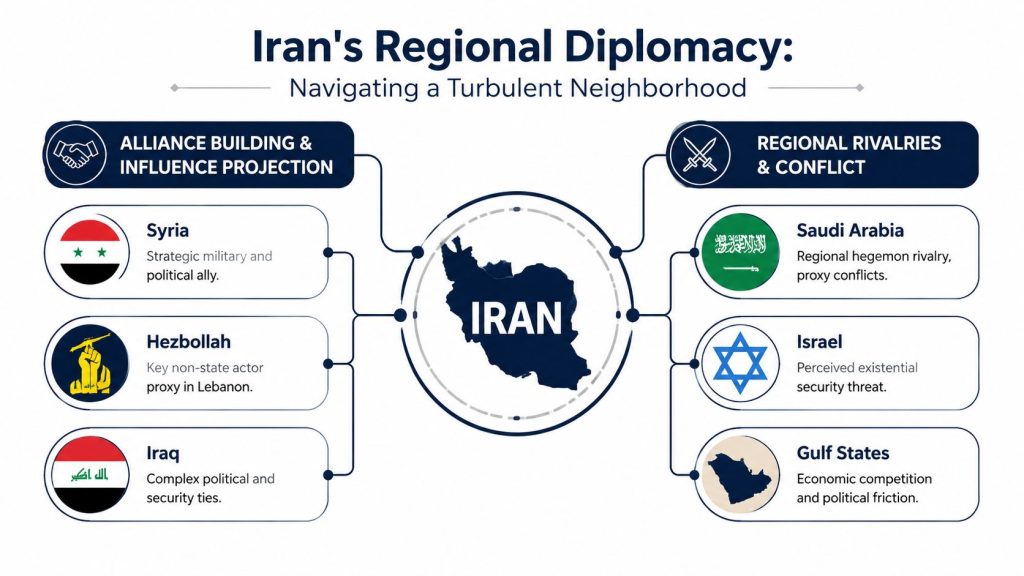
Tehran's outreach to Gulf capitals is best read as risk management, not reconciliation. Iran wants to narrow the number of states willing to align openly with U.S. or Israeli pressure, reduce the chance that a local crisis becomes a broader coalition response, and preserve channels that can contain escalation when direct contact is politically costly.
Saudi Arabia sits at the center of that effort. If relations with Riyadh remain workable, Iran faces a less coordinated Arab front and a lower chance that every confrontation is immediately regionalized. Oman and Qatar matter for a different reason. They provide communication routes that can keep crises from hardening into military action.
That interdependence is the point. The Saudi track affects the U.S. track. Quiet Gulf mediation can also affect Israeli calculations by lowering the political space for a broad anti-Iran alignment.
Three states play distinct roles:
- Saudi Arabia: tests whether competition can be limited without settling the deeper rivalry
- Oman: hosts discreet contacts and crisis messaging
- Qatar: carries messages across overlapping disputes and maintains access to multiple camps
The regional balance remains brittle
The constraints are severe. Iran still faces Israeli military pressure, Gulf distrust, and the persistent risk that activity by aligned non-state actors pulls states into a confrontation they did not intend.
This makes regional diplomacy a shock absorber, not a settlement.
For policymakers, the practical question is whether Gulf engagement changes behavior or buys time. For market participants, the more immediate question is whether de-escalation lowers the probability of disruption in energy transit and shipping insurance. Our energy market analysis of Gulf security and price transmission follows that chain closely.
The answer in both cases is conditional. Diplomatic contact can reduce the odds of miscalculation and narrow the path to a wider war. It does not remove the underlying drivers of conflict. Iran's neighborhood remains a connected system where progress with one actor can ease pressure on one front while increasing suspicion on another. That is why short periods of calm can coexist with high structural risk.
How Diplomacy and Sanctions Drive Global Markets
A tanker operator does not wait for a formal policy paper to price Iran risk. It reacts when insurers raise premiums, compliance teams tighten screening, or naval incidents make a shipping lane look less predictable. By the time officials describe a crisis, part of the market move has often already happened.
That is why iran diplomatic relations matter far beyond foreign ministries. Iran's ties with Washington, Beijing, Moscow, and the Gulf form one connected system. A sanctions signal from the United States can change Chinese buying behavior, Russian bargaining power, Gulf threat perceptions, and shipping assumptions in the same week. Markets respond to that system, not to any single bilateral headline.
The transmission chain from politics to price
The first channel is sanctions enforcement. When Washington tightens pressure or signals stricter enforcement, traders focus on two questions: how much Iranian supply becomes harder to move, and how much compliance risk rises for banks, shippers, and intermediaries. The oil effect matters, but so do freight rates, payment delays, and the discount required to move sanctioned barrels.
The second channel is regional security. If diplomacy with Gulf states holds, markets may assign a lower probability to disruption in the Strait of Hormuz. If deterrence breaks down, the reaction spreads quickly from crude benchmarks to tanker routing, marine insurance, and broader risk sentiment. Readers tracking that transmission in more detail can use this framework for geopolitical energy market analysis and price transmission.
The third channel is expectation. Markets trade on the likely path of policy, not only current restrictions. A limited thaw can compress the risk premium even without a formal sanctions rollback. A breakdown in talks can do the reverse, even before physical flows change.
| Trigger | Immediate market question | Likely area of impact |
|---|---|---|
| Tighter sanctions enforcement | Will Iranian exports, payments, or ship-to-ship transfers face more friction? | Oil balances, compliance costs, freight discounts |
| Maritime or proxy incident | Could disruption spread to shipping lanes or insurance pricing? | Crude prices, tanker rates, war-risk premiums |
| Diplomatic de-escalation | Is the short-term probability of confrontation falling? | Lower geopolitical premium, steadier energy sentiment |
What analysts should track
Headline risk is usually the least useful signal. The better guide is the interaction between state policy, enforcement behavior, and operational stress.
- U.S. enforcement credibility: designations, seizures, and pressure on intermediaries matter more than rhetoric alone
- Chinese purchasing patterns: shifts in buying, payment channels, or shipping practices indicate how much room Iran has to absorb pressure
- Russian coordination: energy and defense ties can give Tehran options, but they also expose competition over discounts, logistics, and political timing
- Gulf de-escalation signals: quiet talks can lower immediate shipping risk without changing the underlying rivalry
- Insurance and freight pricing: these often register stress before official policy catches up
A narrow reading misses the main point. Iran is not just an oil-risk story or a sanctions story. It is a cross-market risk node where diplomacy, enforcement, and regional security reinforce each other.
For policymakers, the implication is straightforward. Sanctions and diplomacy should be judged not only by political signaling but by how they alter supply reliability, shipping behavior, and third-country incentives. For market participants, the practical test is whether a political event changes flows, financing, or transit risk enough to justify repricing.
Outlook for 2026 Three Scenarios for Stakeholders
Scenario one continued stalemate and coercion
This is the base case many officials privately plan around. Tehran keeps balancing pressure with controlled escalation. The United States and Europe preserve pressure. Gulf states maintain dialogue with Iran while hedging against breakdown. Russia and China continue to give Tehran enough room to avoid strategic isolation.
The signposts are familiar: active back channels, no durable breakthrough, recurring IRGC signaling, and periodic market tremors without a systemic break.
Scenario two regional de-escalation and limited opening
This is the more constructive path. Gulf mediation holds. Tehran sees value in lowering regional friction. Washington tests limited understandings rather than grand bargains. Markets respond by trimming some geopolitical premium, especially if shipping risk appears more contained.
This outcome won't look like reconciliation. It will look like managed tension with narrower corridors for crisis. Readers following the nuclear dimension should keep this backgrounder on the Iran nuclear threat in view because nuclear risk remains the fastest route from negotiation to confrontation.
Scenario three major escalation
This is the scenario stakeholders can't afford to treat as tail risk. A failed deconfliction effort, a strike-and-counterstrike cycle, or a sharp break in Gulf mediation could collapse the separation between diplomacy and coercion. Once that happens, Iran's relationships with the United States, Israel, the Gulf, Russia, and China stop being parallel files and become one crisis system.
The leading indicators are less about speeches and more about alignment. Watch whether Gulf intermediaries go quiet, whether coercive signaling outpaces diplomatic messaging, and whether external partners appear less able or willing to absorb the shock.
The central conclusion is straightforward. Iran's diplomacy is best understood as an interconnected system for managing vulnerability, strategic advantage, and survival. Stakeholders who analyze each bilateral relationship on its own will miss the larger risk picture.
Vanitiro is worth bookmarking if you need fast, sourced coverage on sanctions, Gulf flashpoints, and the wider U.S.-Iran security picture. Its reporting connects diplomacy to markets and domestic political fallout without losing the strategic thread.