 Vanitiro Editorial Team
24.3 million forcibly displaced people already sit within the wider Middle East crisis, according to UNHCR's regional situation page. That number reframes the question behind middle east conflict today. This isn't a sequence of adjacent wars. It's one regional emergency in which military operations, diplomatic signaling, sanctions exposure, shipping risk, and humanitarian stress now reinforce each other.
The strategic mistake is to read Gaza, Lebanon, Iran, Iraq, and the Gulf as separate files. They are now linked operationally. ACLED's monitoring shows the conflict has widened from a localized Gaza war into a multi-front regional confrontation, tying fighting in Gaza to violence in Lebanon and Iraq, and to maritime insecurity around the Strait of Hormuz, with direct implications for energy and diplomacy in ACLED's Middle East conflict monitor. The more useful frame is not battlefield geography alone. It's systems stress. A strike in one theater can alter naval posture, insurance pricing, mediation channels, and civilian displacement in another.
Table of Contents
- The Middle East Conflict Now
- Mapping the Active Frontlines
- The Actors Shaping the Conflict
- How the Conflict Widened
- Strategic Moves on the Chessboard
- The Global Economic Fallout
- Navigating What Comes Next
The Middle East Conflict Now
More than one war is now shaping the regional risk picture. The strategic problem is that these fronts no longer behave as separate files on a briefing desk.
The current phase is defined by spillover. Fighting in Gaza interacts with deterrence signaling between Israel and Iran, militia activity in Iraq and Syria, pressure along the Lebanon border, and attacks on commercial shipping. That is why a narrow battlefield summary misses the main point. What appears fragmented at the tactical level is increasingly coherent at the strategic level.
The result is a single crisis system. Military action in one arena now changes diplomatic timelines, insurance costs, force protection requirements, and energy risk calculations elsewhere in the region.
This has immediate policy consequences. A Gaza ceasefire, even if reached, would not by itself stabilize the wider theater if cross-border strikes, proxy mobilization, or maritime coercion continue. The same logic applies in reverse. Pressure in the Red Sea can alter the political space for de-escalation on land because it raises the external economic cost of continued conflict. The pattern is already visible in the way Houthi attacks in the Red Sea have tied a local armed campaign to global shipping disruption.
Core judgment: The Middle East is operating as one interconnected escalation environment, where military, diplomatic, and economic pressures reinforce each other.
Three implications stand out.
- Escalation has become cross-domain. Airstrikes, militia attacks, cyber activity, and maritime disruption now form part of the same pressure cycle.
- Diplomacy faces a linkage problem. Negotiations confined to one front can fail if other actors retain the means and incentive to widen the crisis.
- Economic exposure is no longer secondary. Shipping risk, energy market volatility, and investor caution now feed back into state decision-making.
For cabinet-level planning, the key question is not only where violence is highest today. It is whether the region's main actors still have an interest in compartmentalizing the conflict, or whether they now see advantage in connecting fronts to gain an advantage in negotiations, deterrence, or domestic politics.
One indicator matters more than it did a year ago. Maritime security is no longer a peripheral issue to be handled after the main political talks. It sits near the center of the crisis because threats to commercial transit can turn a regional war into a global economic shock within days.
Mapping the Active Frontlines
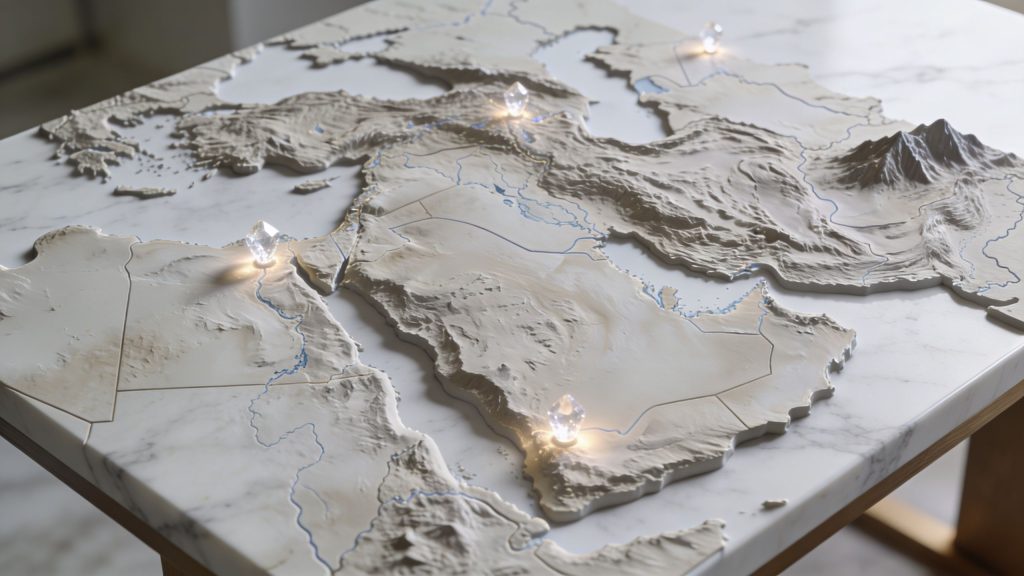
One crisis across several theaters
Five active pressure points now define the regional map: Gaza, southern Lebanon, Iraq and Syria, Iran, and the maritime corridor linking the Red Sea to the Gulf. Treating them as separate crises misses the operational logic connecting them. Armed groups, state militaries, sanctions pressure, and commercial disruption are interacting across the same escalation chain.
The military picture is only part of the story. Displacement, aid access, and shipping risk now shape state decision-making almost as directly as battlefield developments. A strike in one theater can alter insurance pricing, host-country political stability, or the room available for mediation in another.
Fatality reporting also needs source discipline. Conflict event trackers such as ACLED are the appropriate reference point for violence and deaths in theaters like the Israel-Hezbollah confrontation, while humanitarian agencies are more useful for displacement and protection trends. That distinction matters because policymakers need to know whether they are measuring combat intensity, civilian movement, or state capacity stress.
Where the pressure is highest
A functional map is more useful than a geographic one.
| Theater | Immediate strategic relevance | Main policy concern |
|---|---|---|
| Gaza | Main driver of regional mobilization and diplomatic pressure | Civilian harm, aid access, and war duration |
| Southern Lebanon | Most plausible trigger for rapid interstate escalation | Cross-border fire and miscalculation risk |
| Iraq and Syria | Networked militia pressure on U.S. and partner positions | Force protection and escalation control |
| Iran | Center of deterrence signaling and retaliation planning | Direct state confrontation and domestic resilience |
| Strait of Hormuz and Red Sea corridor | Chokepoints where military coercion becomes economic pressure | Energy flows, shipping costs, and trade disruption |
This framing shows why the frontlines should be assessed in linked pairs. Gaza affects Hezbollah's room for action in Lebanon. Pressure on Iran affects maritime risk calculations in Hormuz and beyond. Militia activity in Iraq and Syria influences U.S. posture, which in turn affects deterrence messaging across the region.
Maritime insecurity belongs inside the frontline map, not outside it. Attacks on commercial transit convert local conflict into higher freight rates, rerouted shipping, and tighter energy market risk premiums. For one part of that corridor, Vanitiro's analysis of Houthi attacks on Red Sea shipping lanes shows how quickly armed action at sea feeds into trade and insurance decisions.
Civilian displacement is one of the channels through which localized fighting becomes a broader regional governance and fiscal problem.
Quiet sectors can still carry strategic weight. A front may generate fewer headlines while aid routes narrow, populations move, reserve forces remain mobilized, or shipping patterns change. In this crisis, lower visibility often means the pressure has shifted from direct combat to logistics, deterrence, and political endurance.
The Actors Shaping the Conflict
States pursuing different endgames
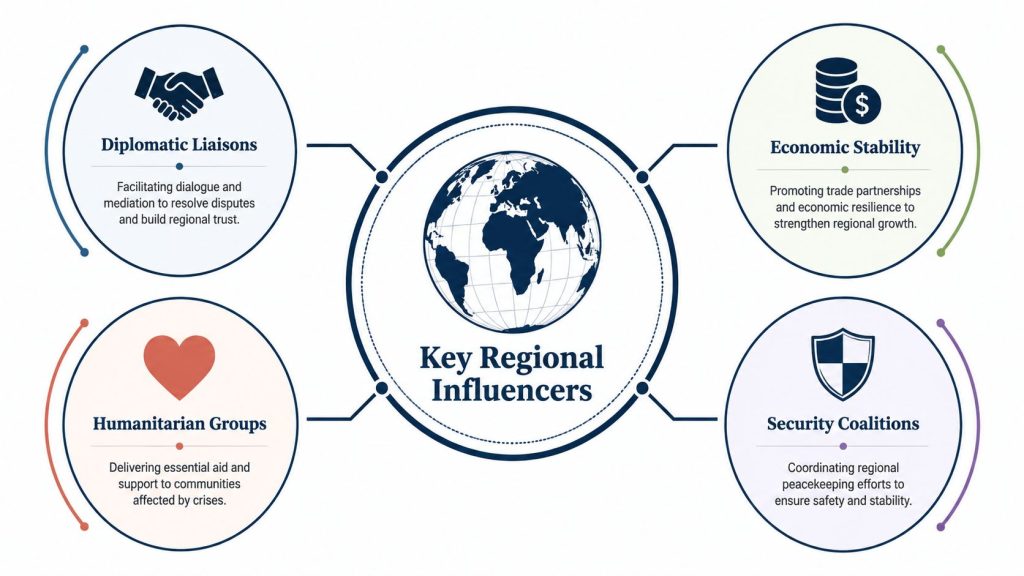
The middle east conflict today is often presented as a simple Iran versus Israel confrontation. That framing is now too narrow. Recent analysis indicates a more complex regional alignment in which the UAE, Saudi Arabia, and Kuwait are reportedly more willing to pressure or confront Iran, while Qatar, Oman, and Turkey are being used as channels to pressure Washington to stop operations, as discussed in this regional alignment analysis.
That split matters because these states are not just observers. They shape escalation control through airspace access, mediation credibility, financial exposure, and their tolerance for prolonged instability. The region is dividing less by ideology than by preferred risk-management method. Some capitals appear more inclined toward coercive containment of Iran. Others are preserving communication channels to cap military momentum before it becomes uncontrollable.
A compact actor map is more useful than a moral taxonomy.
- Israel seeks to degrade hostile networks and prevent adversaries from consolidating across multiple borders. Its advantage is military reach. Its vulnerability is simultaneous pressure on several fronts and the diplomatic costs of prolonged operations.
- Iran aims to preserve deterrence, signal resilience, and avoid appearing strategically cornered. Its strength lies in regional reach, maritime threat options, and indirect pressure channels. Its vulnerability is cumulative strain from direct confrontation and widening economic isolation.
- The United States is balancing force projection, alliance credibility, and escalation management. Its influence is naval and air power plus sanctions infrastructure. Its vulnerability is entrapment in a conflict cycle where tactical success produces broader regional liabilities.
- Gulf states are no longer a single bloc. Their power comes from mediation channels, energy infrastructure, and political influence in Washington and regional capitals. Their vulnerability is proximity. If deterrence fails, they absorb immediate economic and security fallout.
The non-state and intermediary layer
Hezbollah, armed groups active in Iraq, and maritime disruptors all matter because they compress decision time. They can impose retaliation costs faster than formal diplomacy can catch up. That's one reason regional conflict now feels nonlinear. States can try to calibrate. Networked armed actors often don't.
The intermediaries matter just as much. Qatar and Oman, in particular, remain relevant because they can carry messages when public diplomacy hardens. Their importance rises when direct talks become politically toxic. For readers tracking that institutional side of the file, Vanitiro's coverage of the United Nations and Iran is useful context for how formal and informal diplomacy intersect.
The key actors aren't sorted into two camps. They sit on overlapping ladders of coercion, mediation, and exposure.
That creates a distinct policy problem. A state can support pressure in one channel and de-escalation in another. Saudi Arabia or the UAE, for example, may judge Iran as a greater threat while still preferring that Washington avoid an open-ended military campaign. Qatar or Oman may preserve communication routes without endorsing Tehran's behavior. The result is a diplomatic environment that looks contradictory from the outside but is internally rational.
A simple comparison helps:
| Actor type | What they want most | What they fear most |
|---|---|---|
| Direct belligerents | Strategic advantage without unacceptable loss | Loss of deterrence credibility |
| Gulf powers | Managed regional order | Spillover onto their territory and economies |
| Non-state armed groups | Relevance and leverage | Strategic marginalization |
| Mediating states | De-escalation with influence preserved | Being bypassed or discredited |
For policymakers, the central conclusion is straightforward. The conflict won't be shaped only by who has the strongest military. It will also be shaped by which actors can still communicate across camps while absorbing the least domestic and economic risk.
How the Conflict Widened

The escalation sequence
The current crisis widened because each new front altered incentives on the others. Open-source monitoring by ACAPS says the conflict disrupted global trade within ten days of the initial attacks, while missile and drone attacks hit Israel and countries hosting U.S. forces, alongside Israeli strikes across Lebanon, as described in ACAPS' ripple-effects assessment. That speed is the story. Regionalization happened faster than many governments' diplomatic processes could adapt.
A concise timeline captures the logic:
- A localized war frame broke down. Gaza remained central, but violence in Lebanon and Iraq kept active pressure on adjacent theaters.
- Cross-border signaling intensified. Missile and drone attacks expanded the conflict envelope to states hosting U.S. forces, raising alliance and force-protection stakes.
- Commercial systems reacted early. Trade disruption emerged within days, showing that markets were pricing interconnected risk before diplomacy had stabilized.
- Maritime security moved to the center. Once sea lanes became part of escalation, the conflict ceased to be a land-and-air problem only.
Why the spread happened so fast
The spread wasn't accidental. It followed a predictable escalatory logic in a region where deterrence is distributed across proxies, border fronts, and chokepoints. Armed actors did not need to capture territory to widen the war. They only needed to impose costs in new domains.
That is why the timeline matters less as chronology than as mechanism. Each move reduced the space for compartmentalization. Governments that wanted to keep Gaza separate from Lebanon, or Lebanon separate from Gulf shipping, found that operational realities were working in the opposite direction.
A regionally networked conflict doesn't require every actor to coordinate tightly. It only requires each actor to exploit the same moment of instability.
Another underappreciated factor is messaging failure. Public statements often imply control and limited aims, but the structure of the conflict rewards horizontal expansion. When several actors retain the ability to strike indirectly, every tactical event carries interpretive risk. Was it a local retaliation, a deterrent message, or the opening of a new front? Markets, aid agencies, and militaries don't wait for the answer. They hedge immediately.
The result is the crisis visible now. Multiple theaters remain active. Trade routes are part of the battlespace. And efforts to negotiate in one arena are vulnerable to events in another. That's how a war broadens in the Middle East today. Not only through dramatic declarations, but through fast-moving interactions among armed networks, state militaries, and commercially vital corridors.
Strategic Moves on the Chessboard
Maritime coercion and hybrid pressure
The conflict has moved beyond airstrikes and rocket exchanges into a multi-domain contest. Reporting indicates the U.S. has initiated a naval blockade of Iranian ports, while Iran has responded with midget submarines and reported mining activity in or near Strait of Hormuz transit routes, and cyber operations are unfolding alongside those actions, according to Flashpoint's assessment of Operation Epic Fury. That combination is strategically important because it attacks logistics, confidence, and information flow at the same time.
A blockade is never only a naval event. It is a political signal, an insurance event, and a coercive bargaining tool. Mining threats work the same way. A small physical hazard can create a much larger commercial reaction because shipowners, insurers, and governments must price not only actual damage but uncertainty.
Three strategic moves stand out:
- Maritime pressure as a bargaining tool. Interference near Hormuz raises the cost of patience for outside powers and energy importers.
- Cyber operations as force multipliers. They can degrade logistics and information control without requiring visible escalation on every front.
- Hybrid signaling. Naval actions, air operations, and cyber disruption together communicate that no domain is insulated.
Diplomacy under fire
Diplomacy hasn't disappeared. It has been folded into coercion. States are now using talks, channels, and public messaging to shape the operational environment rather than to replace it.
That creates a difficult policy reality. Negotiations conducted during active hybrid pressure tend to become instruments of battlefield timing. One side seeks pause, another seeks an advantage, and intermediaries try to prevent a local concession from looking like strategic defeat.
A practical way to read current diplomacy is to distinguish between three tracks:
| Track | Main function | Current constraint |
|---|---|---|
| Public diplomacy | Signal resolve and define blame | Domestic politics harden positions |
| Back-channel diplomacy | Test limits and exchange warnings | Vulnerable to sudden battlefield shocks |
| Institutional diplomacy | Build external legitimacy | Often too slow for operational tempo |
Working rule: When blockades, cyber activity, and coercive signaling intensify together, diplomacy is usually being used to shape escalation, not end it.
For senior officials, this means military and diplomatic reporting should be read together. A new naval measure may be intended to move a negotiation. A cyber disruption may be designed to weaken bargaining confidence. A mediated proposal may be less about compromise than about freezing one front while another remains active.
The policy trap is to assume that visible talks signal reduced risk. In this conflict, they may indicate that parties are trying to reorder the sequence of pressure.
The Global Economic Fallout
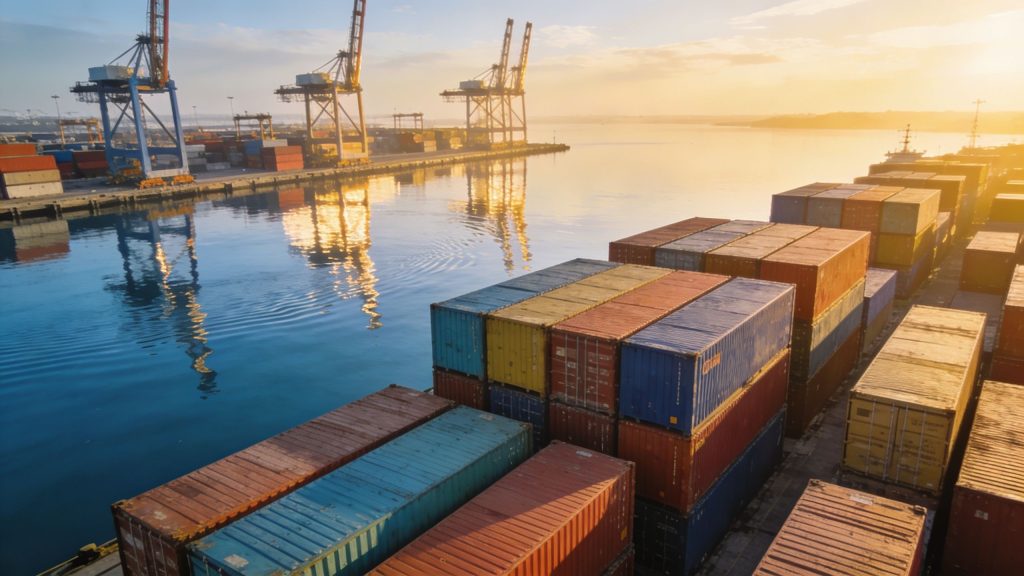
The broader Middle East crisis is already imposing measurable costs outside the region. European officials estimate the disruption is costing Europe about €500 million a day, and the World Bank has warned of a possible 24% rise in energy prices under a wider shock scenario. Those figures matter because they show how pressure applied in Gaza, around Iran, and along Red Sea shipping lanes converges in the same place. Import bills, inflation expectations, and fiscal stress in economies far from the battlefield.
Why the shipping story matters
Shipping markets usually reprice risk before governments change policy. A vessel does not need to be struck for costs to rise. The threat of missile fire, drone attacks, tighter naval screening, or possible disruption near Hormuz is enough to trigger rerouting, higher insurance premiums, delayed delivery windows, and precautionary stockpiling.
That makes maritime insecurity a transmission mechanism, not a side effect. The strategic issue is commercial viability. If ships can technically transit but only at materially higher cost, the region is still exporting instability into global trade. For continued context on how those disruptions feed into prices and state policy, Vanitiro's energy market analysis tracks the market effects of geopolitical risk.
A short visual briefing helps clarify the mechanics:
| Economic channel | Immediate effect | Strategic implication |
|---|---|---|
| Shipping risk | Delays, rerouting, higher insurance exposure | Trade friction spreads beyond the region |
| Energy markets | Faster repricing of oil and LNG risk | Import-dependent economies face inflation pressure |
| Industrial supply chains | Delivery uncertainty | Manufacturers and utilities hedge more aggressively |
| Public finance | Higher subsidy and crisis-management pressure | Governments absorb part of the external shock |
Later in the section, this video provides additional context on how these pressures are being interpreted in public debate:
From regional war to imported inflation
The economic effect is cumulative. Higher freight rates raise input costs. Energy volatility feeds into electricity, transport, and food prices. Governments then face pressure to subsidize households, shield industry, or expand emergency procurement, transferring an external security shock onto national budgets.
This is why the conflict should be read as a single regional crisis rather than a set of isolated flashpoints. Military action in one theater alters insurer behavior in another. Diplomatic deadlock raises the risk premium on fuel. Pressure in the Red Sea can tighten conditions for European manufacturers even if fighting remains concentrated elsewhere.
A disruption that begins as a maritime risk issue can become an inflation issue, a budget issue, and then a political issue in importing states.
The policy implication is clear. States do not need a formal closure of a chokepoint to face economic exposure. Once shipowners, insurers, refiners, and utilities start repricing risk, the crisis has already entered national balance sheets.
Navigating What Comes Next
Three variables will shape the next phase: whether attacks remain compartmentalized, whether mediators can link separate negotiation tracks, and whether governments treat economic exposure as a security problem rather than a downstream cost. The core risk is not one dramatic trigger. It is sustained interaction between theaters, where pressure in Gaza, the Lebanon border, Iraqi and Syrian militia activity, Iranian signaling, and Red Sea disruption reinforce one another faster than diplomacy can contain them.
That makes the next period a test of policy integration.
Three plausible paths
A wider regional war remains plausible if maritime coercion intensifies, the Israel-Lebanon front expands, or direct Iran-related escalation outpaces mediation. In that case, military planning, sanctions policy, convoy protection, and humanitarian access would have to be handled together. Treating them as separate files would slow response times at exactly the point when cross-theater escalation would be accelerating.
A frozen but dangerous conflict is still the most credible near-term scenario. No actor secures a decisive outcome, but each retains enough capability to impose costs across several fronts. That would harden a pattern of recurrent shocks: limited strikes, shipping disruption, militia harassment, diplomatic pauses, then renewed violence. Over time, this scenario is politically corrosive because it normalizes emergency spending and crisis diplomacy without producing strategic closure.
A negotiated de-escalation is possible, but only if mediators address the system rather than a single battlefield. A Gaza arrangement that leaves the Lebanon front unstable, or a maritime understanding that ignores Iran-linked networks, would rest on weak foundations. Partial deals can buy time. They rarely hold if the underlying escalation chain remains intact.
What to monitor now
For ongoing assessment, several indicators matter more than daily rhetoric:
- Maritime posture changes near Hormuz, Bab el-Mandeb, and adjacent sea lanes. These often provide the fastest operational signal that state and market risk is rising.
- Mediator traffic involving Qatar, Oman, Egypt, the United States, and European interlocutors. Quiet sequencing matters. A burst of shuttle diplomacy usually signals concern that separate files are starting to merge.
- Cross-front retaliation patterns linking Gaza, Lebanon, Iraq, Syria, the Gulf, and the Red Sea. The key question is whether actors are signaling restraint or testing how much horizontal escalation their adversaries will tolerate.
- Force protection and reserve posture changes by the United States, Israel, and Iran-aligned groups. These are better indicators of intent than public messaging.
- Budget and procurement decisions by exposed governments. Emergency fuel purchases, subsidy planning, insurance guarantees, and naval redeployments show whether leaders expect a prolonged crisis rather than a short spike.
A disciplined source mix matters. Conflict trackers such as ACLED and ACAPS help identify tempo and geographic spread. UN agencies and major humanitarian monitors are necessary for displacement and access constraints. Specialist maritime and cyber risk reporting helps clarify where hybrid pressure is building before it becomes visible in mainstream political coverage.
The central conclusion is straightforward. Middle east conflict today is a single regional crisis expressed through several theaters. Any serious policy response has to connect the military map, the diplomatic channels, and the economic effects in the same frame.
Vanitiro tracks conflicts the way decision-makers need to see them: across security, sanctions, diplomacy, and economic spillovers in one place. If you want concise, sourced updates on the Middle East and the global consequences that follow, follow Vanitiro.