 Vanitiro Editorial Team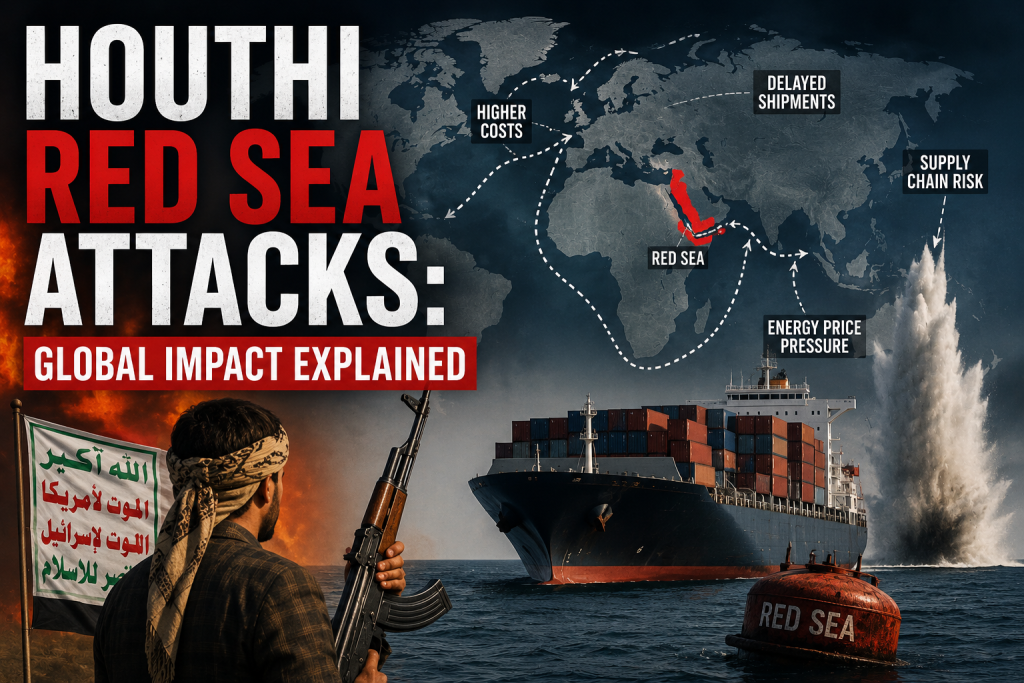
The most revealing number in the houthi red sea attacks story isn't the missile count. It's the shipping collapse. Traffic through the Bab al-Mandab and the broader Red Sea corridor fell sharply enough that transit volumes in the strait dropped more than 50% year over year, while Suez Canal transits fell from 2,068 in November 2023 to 877 in October 2024, according to Washington Institute analysis of the Houthi shipping campaign.
That changes the frame. This isn't piracy with better branding. It's a sustained attempt by a non-state actor to impose strategic costs on global commerce from one of the world's most sensitive maritime chokepoints. The immediate victims are shipping lines, importers, and energy buyers. But the more interesting question is why the Houthis keep doing it, even under military pressure.
The answer sits in the gap between rhetoric and incentives. Publicly, the Houthis cast the campaign as solidarity with Gaza. In practice, the attacks also deliver something more durable: visibility, coercive influence, domestic prestige, and proof that they can threaten high-value trade routes at a cost far below what outside powers must spend to defend them. For the Houthis and their sponsors, that asymmetry is the point.
Table of Contents
- Introduction The Red Sea Under Siege
- Who Are the Houthis and Why Are They Attacking Ships
- Timeline of the Red Sea Crisis Escalation
- Anatomy of an Attack Houthi Tactics and Technology
- Global Shockwaves The Impact on Shipping and Energy Markets
- The International Response Operation Prosperity Guardian
- The Policy Chessboard US Iran Dynamics and Future Scenarios
Introduction The Red Sea Under Siege
Roughly 12% of global trade passes through the Red Sea corridor, according to the U.S. Energy Information Administration's overview of the Bab al-Mandab chokepoint. That exposure helps explain why a campaign launched by a non-state actor in one of the world's poorest countries has disrupted shipping decisions far beyond the Arabian Peninsula.
The Houthis have turned the Red Sea into a test case for low-cost coercion. They do not need to close the Bab al-Mandab outright to produce strategic effects. They need to make passage risky enough that shipowners, insurers, and governments price in danger, delay cargoes, reroute vessels, and absorb the cost themselves.
Main takeaway: The Houthis don't need to shut the waterway completely. They only need to make normal transit look imprudent.
That logic gives the campaign a harder edge than solidarity rhetoric suggests. For the Houthis, maritime attacks are a relatively cheap way to raise their regional profile, impose costs on adversaries, and reinforce their value to Iran and the wider anti-Western axis without fighting a conventional naval war they would lose.
The economic asymmetry is the point. A drone or missile that is inexpensive to launch can force a merchant vessel worth tens of millions of dollars to divert, or push insurers and carriers to change behavior preemptively. From the Houthis' perspective, this calculus makes the campaign rational even if it invites retaliation. It offers visibility, bargaining power, and political relevance at a cost they appear willing to bear.
Military interception can reduce the number of successful strikes. It does not by itself erase the commercial fear premium the attacks were designed to create.
Who Are the Houthis and Why Are They Attacking Ships
Ansar Allah, better known as the Houthis, governs substantial parts of northern Yemen, fields missiles and drones, collects revenue, and negotiates from a position closer to a de facto state authority than a conventional insurgency. That matters because the Red Sea attacks are not acts of defiance alone. They are part of a broader strategy to convert military persistence at home into political influence abroad.

A movement with local roots and regional reach
The Houthis emerged from Yemen's Zaydi revivalist politics, then expanded through war, alliance-building, and state collapse. Years of conflict with the internationally recognized government and the Saudi-led coalition helped turn them from a northern insurgency into the strongest armed actor in much of Yemen's populated highlands.
Their relationship with Iran is best understood as aligned but not identical. Tehran supplies know-how, political backing, and a place within the wider anti-Western regional axis. The Houthis still pursue their own interests, especially where maritime pressure can strengthen their standing inside Yemen. That degree of autonomy increases their value to Iran. A partner with room to act can harass rivals, complicate U.S. planning, and preserve deniability better than a force that appears to take direct orders.
The domestic payoff is easy to miss. External confrontation can reinforce internal control by portraying the movement as both defender of Yemen and participant in a larger regional struggle. For a group seeking long-term political centrality, that image has value even if the attacks do not produce direct economic gain.
Why shipping became the target
Shipping gives the Houthis something Yemen's ground war no longer can. It offers international visibility, a steady stream of vulnerable commercial targets, and a way to impose costs on multiple adversaries at once.
The public case is solidarity with Palestinians during the Gaza war. That narrative has real appeal across the region. But it does not fully explain why the group chose a trade chokepoint, why it sustained the campaign despite military retaliation, or why the target set expanded beyond the narrowest definition of Israel-linked shipping.
A harder explanation is strategic economics. Merchant shipping is lightly defended compared with state militaries. The commercial consequences of even attempted strikes are large. And the political audience is global. A missile launch that misses can still alter routing decisions, insurance pricing, and naval deployments. For the Houthis, that is a favorable exchange.
The campaign serves four purposes at once:
- Domestic legitimacy: It casts the Houthis as an actor willing to confront Israel and the United States, a message that can strengthen support among constituencies that prize resistance.
- Negotiating influence: It reminds Saudi Arabia, Gulf states, and outside powers that Yemen cannot be stabilized or bypassed without dealing with the movement that controls the Red Sea coast.
- Regional status: It turns a Yemeni faction into a player with influence over a major trade corridor, which raises its profile well beyond the civil war.
- Sponsor value: It gives Iran a relatively low-cost way to pressure Western and Israeli interests indirectly while avoiding a direct state-to-state clash.
The Red Sea campaign turns geography and inexpensive strike capacity into bargaining power.
That does not make the strategy low-risk. U.S. and allied strikes can degrade launch sites, expose command networks, and raise the cost of sustaining the campaign. Miscalculation could also alienate commercial partners or harden diplomatic opposition. Even so, the Houthis appear to judge that the benefits outweigh the penalties. Asymmetric coercion at sea gives them attention, relevance, and a claim to regional importance that Yemen's domestic arena alone could not provide.
Timeline of the Red Sea Crisis Escalation
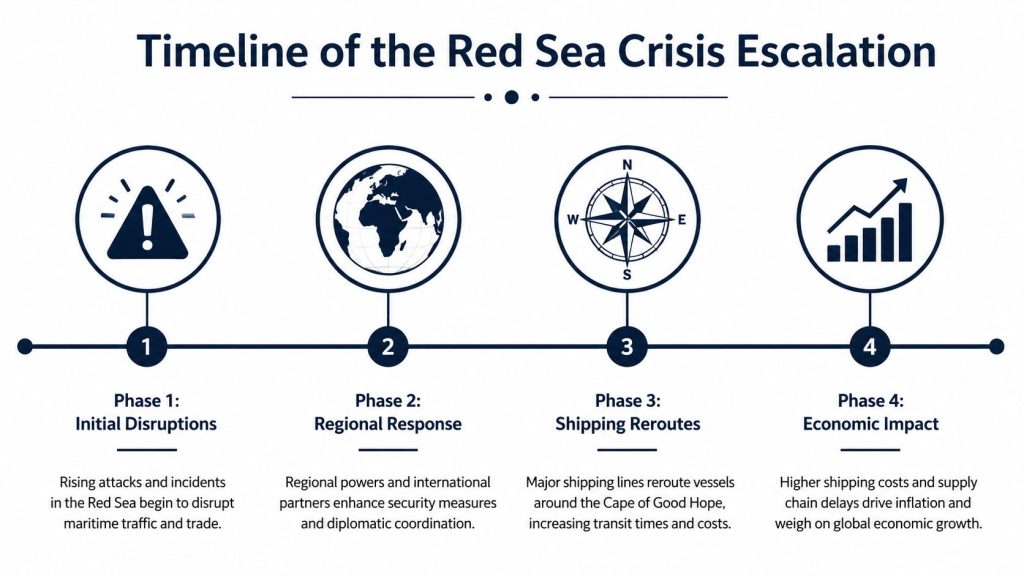
Within weeks of the Gaza war's outbreak, a local insurgent movement had inserted itself into one of the world's busiest maritime corridors. The escalation was gradual, but the logic was disciplined. The Houthis widened the campaign only after each earlier step showed that limited coercion could produce outsized economic and diplomatic effects.
From symbolic strikes to maritime coercion
The opening phase came in October 2023, with missile and drone launches presented as support for Palestinians and pressure on Israel. Those strikes had limited direct military effect, but they served a larger purpose. They signaled that the Houthis intended to link Yemen's warfront to the regional conflict and test how much attention that claim could command.
The campaign changed character in November, when attacks moved from distant signaling to commercial shipping in and around the Red Sea. The seizure of the Galaxy Leader on November 19, 2023 was the clearest breakpoint. A ship seizure is harder for markets and governments to discount than a failed long-range launch. It created imagery, legal ambiguity, and insurance risk in one stroke.
That mattered for the Houthis' cost-benefit calculation. Harassing shipping offered more coercive value than firing sporadically at Israel. It also gave the group a way to impose costs on multiple audiences at once, from shipping firms and insurers to Western navies and Gulf governments.
How the target set widened
By December 2023, the targeting standard had already become less precise. Early claims focused on Israel-linked vessels. In practice, that quickly expanded into a broader and murkier set of criteria tied to destination, ownership history, commercial relationships, or perceived association. For shipping companies, ambiguity was part of the threat. If a vessel's exposure cannot be judged confidently in advance, avoidance becomes the safer commercial decision.
The next shift was more consequential. What began as selective targeting increasingly resembled coercive disruption of trade connected to Israel in a wider sense, not just direct Israeli ownership. That widened the pool of ships potentially at risk and reduced the value of legal or corporate distancing. It also helped the Houthis preserve freedom of action. A flexible definition of the target let them claim political intent while keeping opponents uncertain about where the line sat.
A short chronology makes the pattern clearer:
| Phase | Strategic shift | Practical effect |
|---|---|---|
| Initial phase | Missile and drone launches toward Israel | Regional signaling and media attention |
| Maritime phase | Seizures and attacks on Israel-linked shipping | Insurance risk rises and naval escorts become more likely |
| Expansion phase | Broader criteria for vessel exposure | Carriers face uncertainty over routing, ownership links, and port calls |
| Entrenchment phase | Continued attacks despite U.S. and allied retaliation | Rerouting and higher transport costs become embedded in commercial planning |
The wider pattern is the point. The Houthis did not need to stop most ships. They needed to make enough firms, underwriters, and governments conclude that normal passage was no longer a routine commercial judgment.
For the movement and its backers, that is a rational if risky exchange. Cheap attacks, or even credible threats of attack, can force expensive defensive deployments and reroute trade flows far beyond Yemen's coastline. The campaign's timeline shows measured escalation, not improvisation. Each phase increased the political return on relatively limited military means.
Anatomy of an Attack Houthi Tactics and Technology
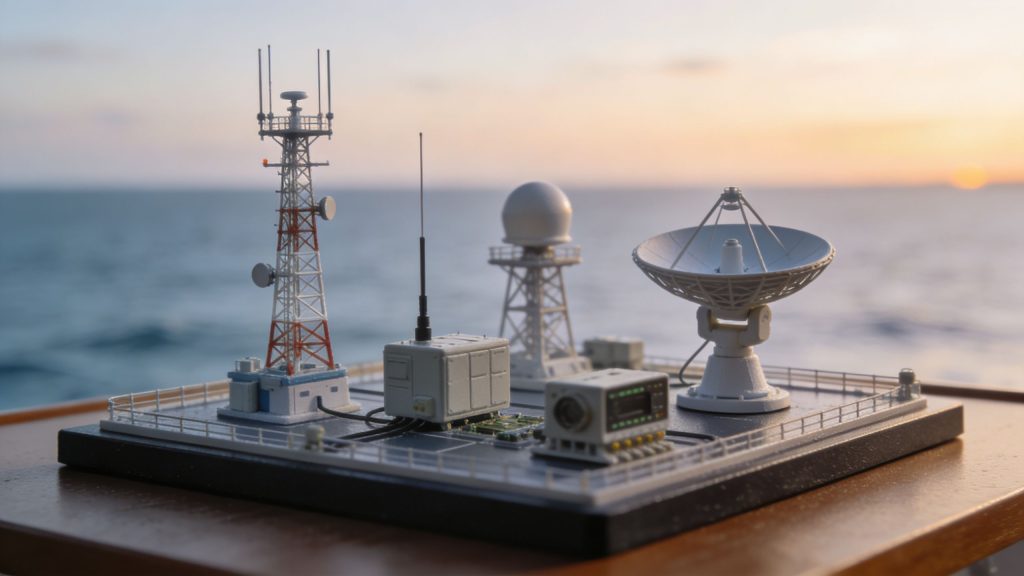
The Houthis' military innovation isn't that they invented new weapons. It's that they combined existing tools into a campaign that exploits the cost mismatch between attacker and defender.
Cheap platforms expensive consequences
According to the documented technical profile in the Red Sea crisis reference, Houthi drone-missile hybridization includes Wa'id loitering munitions with a 2,500km range and Quds Z-0 cruise missiles with a 1,350km range. The same reference notes a rough cost asymmetry of about $20K per drone versus $2M per intercept.
Even if those figures vary in practice, the strategic meaning is plain. Defenders burn expensive interceptors to defeat comparatively cheap threats, while shipping firms react to risk rather than waiting for damage. That gives the attacker two ways to win. A strike can land, or a strike can force avoidance. Both create economic effect.
The logic of layered disruption
The Houthis don't rely on one platform or one method. The record cited above includes missiles, drones, small boat assaults, and other combinations designed to complicate defenses and stretch response time. Saturation matters because it pressures warships and commercial operators differently.
For navies, the problem is magazine depth, detection, and rules of engagement. For merchants, the problem is uncertainty. A vessel master and insurer don't need to believe interception will fail every time. They only need to believe the route has become unpredictable enough to justify diversion.
- Missiles threaten from range and force rapid defensive decisions.
- Loitering munitions sustain pressure and test air defenses.
- Small boat actions create close-in risks even after a missile event.
- Selective targeting amplifies fear because operators can't always tell whether their ownership, cargo history, or port calls place them inside the threat envelope.
Practical rule: In maritime coercion, ambiguity is often as useful as accuracy.
The same Red Sea crisis reference says the tactic has forced hundreds of ships to reroute around Africa and contributed to a 10% displacement of the global fleet. That's the strategic achievement. The Houthis don't need sea control in the classical naval sense. They need enough strike capacity, and enough perceived intelligence reach, to make selective denial believable.
Global Shockwaves The Impact on Shipping and Energy Markets
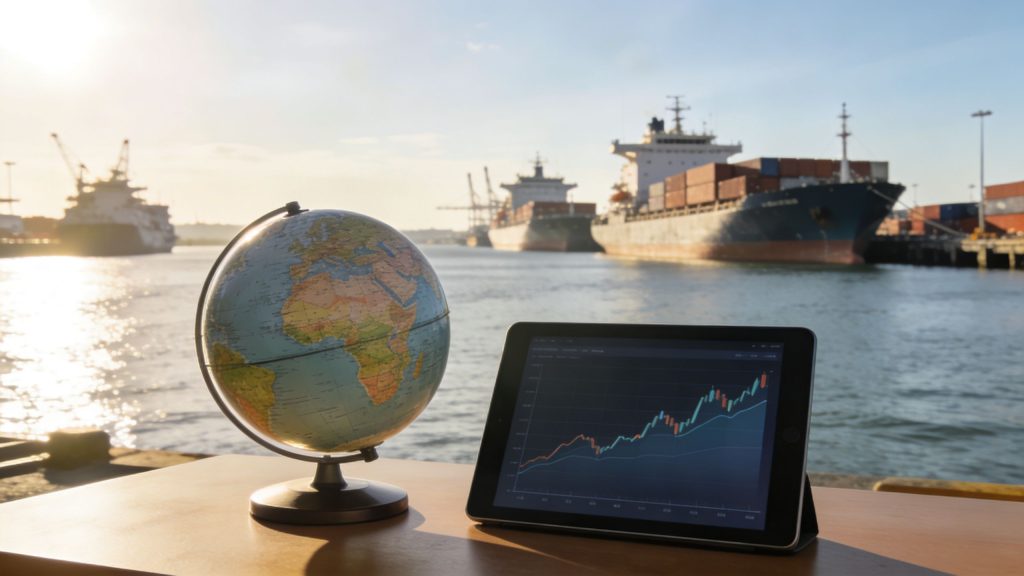
A narrow waterway that normally carries a large share of Europe-Asia trade became expensive to use almost overnight. That shift mattered less because cargo stopped moving than because the price of certainty jumped across shipping, insurance, and energy.
Shipping paid first
The immediate impact showed up in route choices. Carriers diverted vessels around the Cape of Good Hope, adding time, fuel costs, crew expenses, and schedule disorder. That burden then spread outward to ports, manufacturers, insurers, and governments that depend on canal transit.
For the Houthis, that is the point. They cannot close the Red Sea in a classical naval sense, but they do not need to. They need to make passage risky enough that commercial actors impose the disruption on themselves. Every voluntary rerouting decision turns a limited strike capability into a wider economic effect.
Three consequences followed.
- Container networks lost reliability. Longer voyages disrupted vessel rotations, equipment availability, and delivery windows.
- Egypt absorbed direct fiscal pain. Fewer transits meant weaker Suez Canal revenue at a time when Cairo was already under economic pressure.
- European and Asian supply chains imported delay. Factories and retailers faced higher landed costs, especially where inventories were lean and parts were time-sensitive.
That asymmetry explains why this campaign is rational from Sanaa's perspective, and from Tehran's. Intercepting drones and missiles costs far more than launching many of them. The shipping industry then magnifies the effect by pricing in danger before every threat has to be proven.
For readers tracking the knock-on effects in oil and gas, this related energy market analysis shows how freight disruption feeds into wider commodity pricing.
Energy markets felt the squeeze differently
Energy flows reacted less uniformly than container shipping. Oil cargoes can often absorb longer voyages if freight economics still work. LNG is less forgiving because delivery timing, vessel availability, and regional price spreads matter more.
The market signal came through logistics first. Longer routes tightened tanker and gas-carrier availability, insurance costs rose, and buyers paid more attention to delivery risk. Physical shortages were not the main story. Risk premiums were.
That distinction matters for understanding Houthi incentives. A campaign like this does not need to remove large volumes from the market to influence prices and diplomatic calculations. It only has to inject enough uncertainty to force traders, shipowners, and governments to treat the corridor as unstable. That raises the strategic return on relatively cheap attacks while pushing outside powers into a costly protection mission.
This visual recap helps show why markets reacted so quickly.
The larger lesson is economic as much as military. Maritime coercion works when the target system is optimized for speed, tight scheduling, and low margins for delay. In that setting, the Houthis do not need sustained battlefield success. They need repeated, credible disruption that makes everyone else pay to restore normal trade.
The International Response Operation Prosperity Guardian
Operation Prosperity Guardian has protected ships, but protection is expensive and deterrence is incomplete.
That asymmetry matters. The coalition must monitor a long corridor, share intelligence across multiple navies, and make split-second interception decisions under commercial pressure. The Houthis need far less. They only need to keep the route risky enough that shipowners, insurers, and charterers continue pricing the Red Sea as a problem.
What the coalition can do
Coalition forces can escort merchant traffic, expand surveillance, intercept missiles and drones, and strike launch sites and storage areas. Those actions reduce immediate danger and force the Houthis to hide equipment, disperse crews, and accept a higher chance that launch preparations will be detected.
The operational record shows real defensive capacity. In October 2023, the USS Carney shot down missiles and drones launched from Yemen in an early sign that U.S. naval air defense would become a central part of the response. That mattered for force protection and for allied credibility. It showed that Western navies could blunt attacks. It did not show that they could restore normal commercial behavior on their own.
The diplomatic layer is just as important. A maritime coalition can intercept projectiles, but it cannot by itself settle the wider contest over sanctions, escalation, and Iran's regional network. Readers tracking that broader debate can compare the naval mission with U.N. debates over pressure on Iran.
Why deterrence remains partial
The problem is economic as much as military. Interceptors, carrier strike group deployments, and round-the-clock patrols cost far more than the drones and missiles used to keep the corridor unsettled. For the Houthis and their backers, this is a favorable exchange ratio if the campaign sustains political relevance, burdens U.S. resources, and keeps insurance and freight markets on edge.
Shipping companies judge success by reliability, not by tallying interceptions. A navy can win repeated tactical engagements while commercial operators still reroute because the residual risk remains hard to price. One missile that gets through matters less than the persistent possibility that one might.
This is why the campaign remains rational for the Houthis despite retaliatory strikes. They absorb losses, but they also impose recurring costs on richer adversaries and keep themselves central to regional diplomacy. Operation Prosperity Guardian has limited the damage. It has not removed the Houthis' incentive to keep testing the corridor.
The Policy Chessboard US Iran Dynamics and Future Scenarios
Washington, Tehran, and the Houthis are each trying to keep the conflict below the threshold of a wider war while still changing facts on the ground. That balancing act explains why the crisis has proved so resistant to military fixes.
For Washington, the objective is narrower than regime change or open-ended escalation. It is to protect shipping, reassure partners, and keep a regional proxy fight from becoming a direct U.S.-Iran confrontation. For Tehran, the appeal is the reverse. It can raise pressure on the United States, Israel, and Gulf rivals through an allied movement that preserves plausible deniability. The Houthis sit in the middle of that triangle and have strong reasons to keep playing.
Why the campaign is rational for the Houthis
The Houthis are not attacking ships to display solidarity alone. They are using a global chokepoint to raise their own strategic value.
That logic matters. A movement that once looked confined to Yemen's civil war now shapes insurance costs, shipping routes, and diplomatic messaging far beyond Yemen. Even if many projectiles are intercepted, the Houthis still gain attention, bargaining relevance, and domestic prestige from proving that they can threaten traffic through one of the world's busiest maritime corridors.
The cost-benefit ratio helps explain their persistence. A drone or missile campaign is relatively cheap compared with the naval deployments, air defense interceptors, and constant surveillance needed to suppress it. The Houthis also do not need to halt Red Sea commerce outright. They only need to keep enough uncertainty in the corridor that shipowners, insurers, and governments continue to factor them into every regional calculation.
For Iran, this is a useful pressure tool. For the Houthis, it is even more valuable. The group strengthens its claim to leadership inside Yemen, complicates Saudi and U.S. planning, and makes itself harder to sideline in any future settlement. Readers following that wider diplomatic track should watch how maritime pressure intersects with debates over sanctions and bargaining in U.S.-Iran diplomacy and one-page deal discussions.
Three plausible paths ahead
The next phase is likely to follow one of three paths.
Conditional de-escalation
A ceasefire or political pause tied to Gaza could lower the pace of attacks. That would ease shipping pressure for a time, but the underlying model would remain available for reuse whenever regional tensions spike.Managed chronic disruption
This is the most likely outcome if current incentives hold. Navies keep intercepting. Shipping firms keep adjusting routes and premiums. The Houthis preserve enough threat credibility to stay politically relevant without provoking an overwhelming response.Wider regional escalation
If U.S.-Iran tensions sharpen or an attack causes mass casualties, the Red Sea could become one front in a broader conflict. In that case, the current balance of calibrated pressure would give way to direct retaliation and a much higher economic shock.
The central policy problem is changing the Houthis' incentives, not just degrading their arsenal. Punitive strikes can destroy launchers and storage sites. They do less to reduce the political returns the group earns from keeping the corridor unstable.
That is why this campaign remains a rational, if risky, choice for the Houthis and for Iran's broader regional strategy. As long as a relatively low-cost threat can generate diplomatic attention, impose economic friction on richer adversaries, and preserve deniability for Tehran, the Red Sea will remain exposed to recurring disruption.