 Vanitiro Editorial Team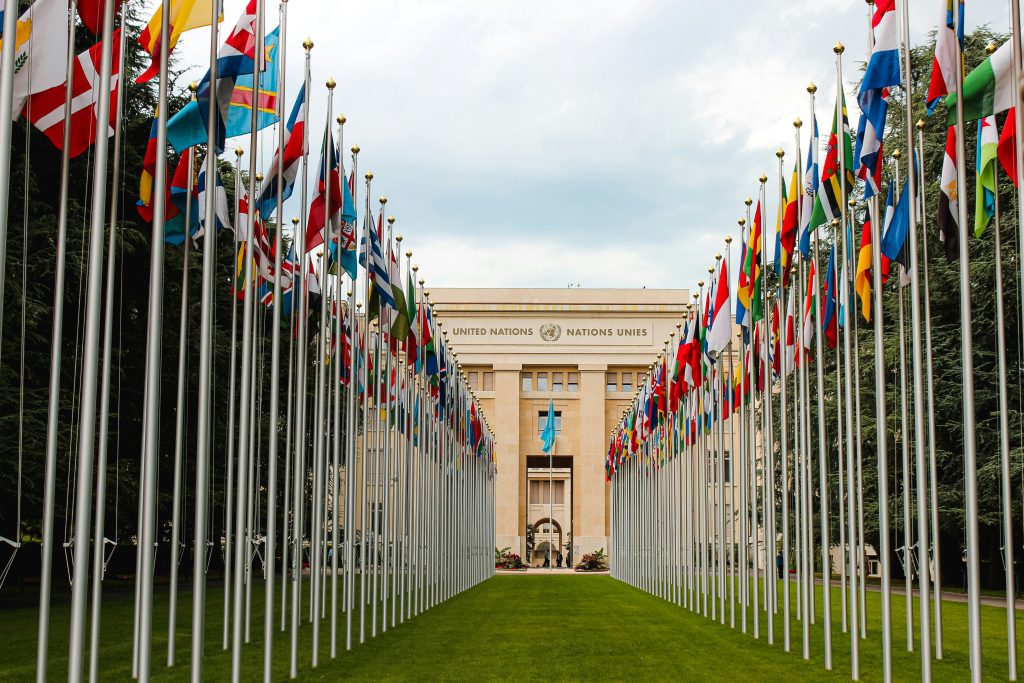
At a UN table, Iran is never only one issue. A debate over inspectors can move sanctions law, a human rights resolution can reshape diplomatic coalitions, and a funding shortfall can surface days later in oil pricing.
That's why united nations iran matters far beyond New York or Vienna. It is one of the clearest places to watch how security, diplomacy, and humanitarian pressure feed each other, then spill into regional stability and global markets.
Table of Contents
- The UN and Iran at a Crossroads
- From Founding Member to Contested State
- The Nuclear File and IAEA Oversight
- How UN Sanctions on Iran Actually Work
- Diplomacy and Voting Patterns in the General Assembly
- The Human Rights Record and Humanitarian Crises
- Future Implications for Global Security and Energy Markets
The UN and Iran at a Crossroads
The sharpest mistake in covering Iran at the UN is treating each file in isolation. Nuclear oversight is discussed as a technical matter. Human rights are framed as moral advocacy. General Assembly maneuvering is dismissed as symbolic. In practice, each one affects the credibility of the others.
Iran's relationship with the UN now sits at that intersection. UN reporting has documented that Iran ceased key commitments under the 2015 Joint Plan of Action, or JCPOA, after the U.S. withdrawal in 2018, and that non-compliance fed a sanctions environment that has made Iran one of the world's most sanctioned states, according to the UNDP Iran factsheet.
That matters because the UN isn't just a forum where Iran is criticized. It is also a system through which Iran seeks diplomatic legitimacy, humanitarian support, and room to maneuver under pressure. The same institution can host condemnation, negotiation, technical monitoring, and aid coordination. Few states engage the UN on all four fronts at once.
Why this is more than institutional politics
For energy and security analysts, the key point is causality. A dispute over inspector access or compliance language can harden sanctions expectations. Harder sanctions expectations can alter shipping risk and insurance calculations. Political stress inside Iran can then amplify those risks in the Gulf.
Practical rule: When united nations iran headlines turn more confrontational across multiple UN bodies at the same time, the story is no longer just diplomatic. It becomes a market and security story.
Three tracks usually move together:
- Security track: Nuclear oversight, Security Council pressure, and enforcement disputes.
- Diplomatic track: Coalition-building, speeches, abstentions, and reputation management.
- Human rights track: Scrutiny of repression, humanitarian access, and the legitimacy costs of state violence.
When those tracks reinforce each other, Tehran's room for tactical flexibility narrows. When they diverge, Iran gains space to separate audiences, negotiate selectively, and argue that legal pressure is political rather than universal.
The signal hidden in plain sight
Most reporting captures one moment. The better analytic question is whether the UN system is producing a coherent signal. If inspectors raise alarms while humanitarian agencies face strain and rights mechanisms appear divided or selective, the result is not balance. It is fragmentation.
That fragmentation is dangerous because adversaries often read it as weakness, while markets read it as uncertainty. In the Iran case, uncertainty rarely stays confined to diplomatic language.
From Founding Member to Contested State
Iran did not enter the UN as an outsider. It joined the United Nations on October 24, 1945, as one of the original 50 founding members, and the UN Information Centre opened in Tehran in 1950, according to the UN in Iran overview.
That founding role still matters. It means Iran's conflict with the UN system is not the story of a state excluded from the postwar order. It is the story of a state embedded in that order, then increasingly at odds with some of its core enforcement and normative mechanisms.
Early integration and later estrangement
In its early UN presence, Iran fit the profile of a state participating in the institutional architecture of the new international system. Over time, that position changed. Revolution, war, ideological realignment, and eventually the nuclear dispute transformed Iran from participant to subject of sustained scrutiny.
The result wasn't total rupture. Iran remained significantly involved in UN diplomacy while resisting UN pressure in other domains. That duality explains much of the confusion surrounding united nations iran coverage. Tehran is neither fully isolated from the system nor comfortably integrated within it.
A more accurate description is contested membership. Iran uses UN platforms, hosts UN activity, and negotiates through UN channels. At the same time, UN bodies scrutinize its nuclear conduct, rights record, and regional behavior.
Why the history still shapes present behavior
This older history helps explain two recurring Iranian positions at the UN:
-
Legalist language
Iranian officials often argue in terms of sovereignty, non-interference, and unequal enforcement. That language has traction because Iran can point to its long-standing place inside the formal international order. -
Institutional selectivity
Tehran tends to engage the parts of the UN that preserve dialogue or development space, while contesting the parts that generate inspection, sanctions, or rights pressure.
Iran's long UN membership gives it a diplomatic argument that many sanctioned states lack. It can claim not that it rejects the system, but that the system has been applied unevenly.
That distinction is politically useful. It allows Iran to criticize outcomes without renouncing the institution itself.
The overlooked consequence
For outside governments, Iran's founding-member status complicates strategy. Pressure campaigns work differently when directed at a state that can still invoke institutional legitimacy and maintain broad multilateral relationships. That is one reason Iran policy at the UN rarely produces clean outcomes. The architecture of pressure sits inside the architecture of inclusion.
The Nuclear File and IAEA Oversight
The nuclear file is the hinge on which the broader UN-Iran relationship turns. It is the issue that converts technical monitoring into sanctions law, diplomatic bargaining, and military signaling.
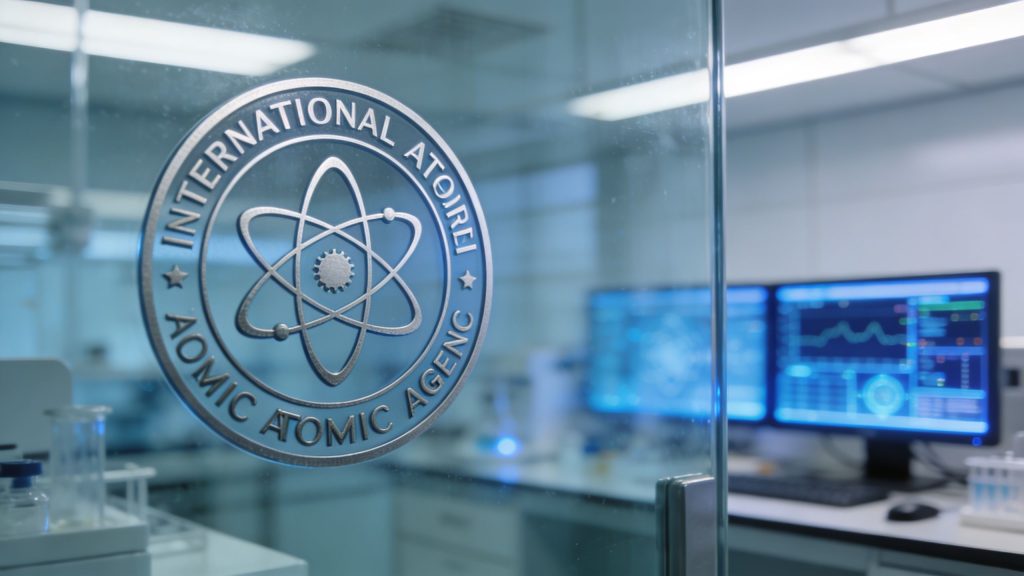
What the IAEA actually does
The International Atomic Energy Agency, or IAEA, is the inspection and verification arm that gives governments a factual basis for action. Its role is not to set grand strategy. Its role is to establish what Iran is doing, what access inspectors have, and whether declared commitments match observable activity.
That distinction matters. When the IAEA reports friction, non-cooperation, or inconsistency, it changes the legal and diplomatic environment for everyone else. Security Council members, European governments, Gulf states, and energy traders all build risk assessments on that technical foundation.
The nuclear debate often sounds abstract, but its mechanics are straightforward:
- Inspectors verify whether declared nuclear activity matches agreed limits and reporting obligations.
- States interpret those findings through their own security interests.
- UN bodies react with pressure, negotiation, or procedural escalation.
The file becomes dangerous when those stages stop aligning.
Why the JCPOA breakdown changed the UN debate
The modern turning point came after the U.S. withdrawal from the JCPOA in 2018. According to the earlier cited UNDP material, Iran then ceased key commitments under the agreement, and UN reporting documented non-compliance. That changed the argument from whether the agreement could restrain the program to whether the remaining oversight structure could still command confidence.
For a concise strategic primer, see Vanitiro's analysis of the Iran nuclear threat.
The effect inside the UN system was immediate in conceptual terms, even when formal procedures moved slowly. Once compliance confidence erodes, every subsequent dispute becomes heavier. Inspector access is no longer a routine safeguards issue. It becomes a test of whether diplomacy still has any enforcement value.
The IAEA doesn't create the political crisis. It makes the crisis legible.
That's why even highly technical phrases in agency reporting can move wider geopolitics. The agency speaks in verification language, but states hear deterrence, escalation, and credibility.
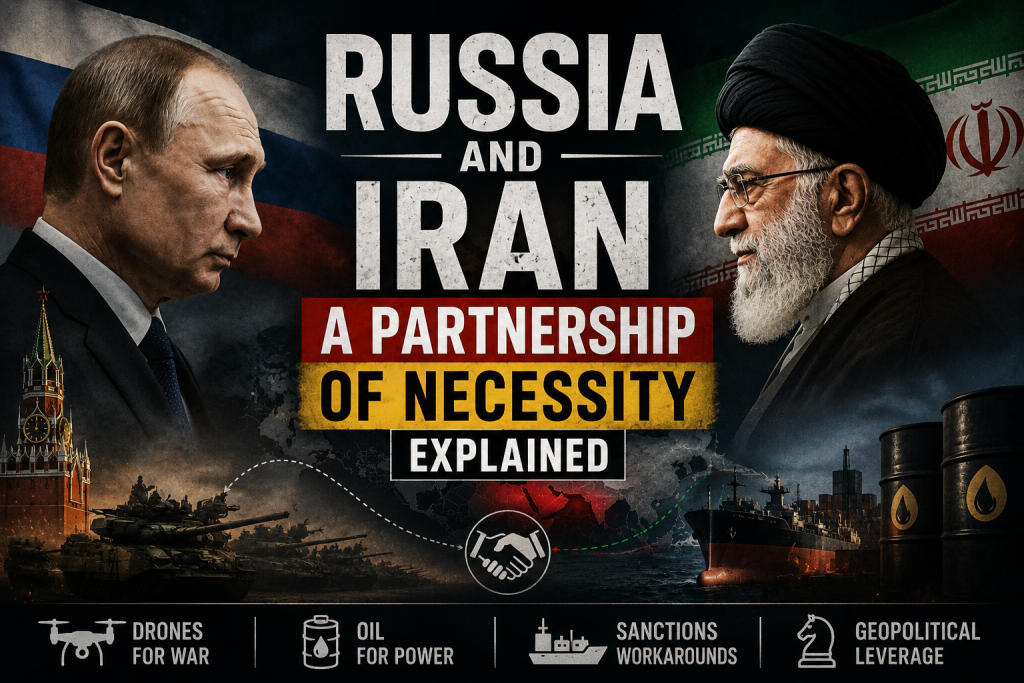
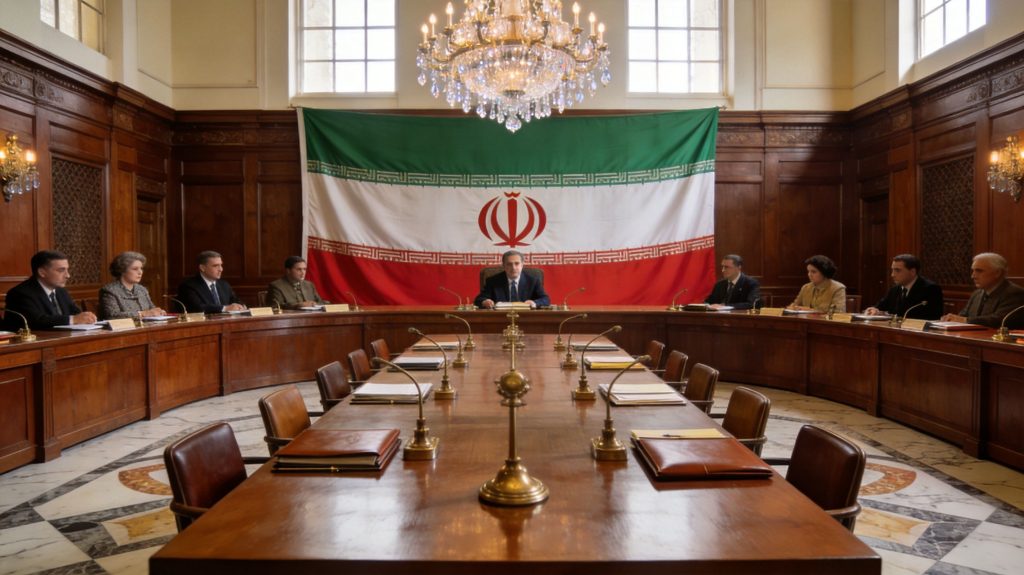
A useful visual reference is below.
The larger consequence of technical failure
Once trust in oversight breaks down, diplomacy itself changes character. Negotiation becomes less about confidence-building and more about loss management. States no longer ask how to improve cooperation. They ask how to contain the consequences of further deterioration.
That is the deeper significance of united nations iran on the nuclear file. The issue isn't only whether Iran's program can be monitored. It's whether multilateral oversight can still translate verified facts into a stable political framework.
How UN Sanctions on Iran Actually Work
Sanctions are often described as punishment. In UN practice, they are better understood as codified coercion. The Security Council identifies conduct it wants stopped, translates that into legal obligations for member states, and turns compliance into a global enforcement test.
The Security Council's enforcement chain
The clearest examples are UN Security Council Resolutions 1737 (2006) and 1747 (2007). Those measures banned the supply of nuclear-related materials to Iran and froze assets of key individuals and entities, including the Atomic Energy Organization of Iran. Resolution 1747 intensified pressure with an arms embargo on Iranian weapons exports and targeted Bank Sepah, according to the International Iran Sanctions Database maintained by United Against Nuclear Iran.
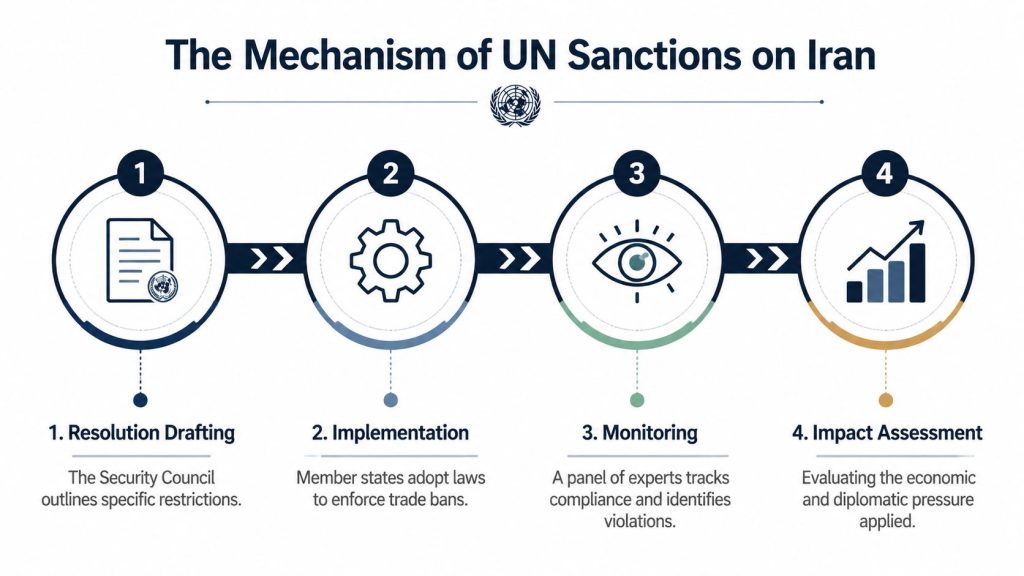
What matters is the sequence. A sanctions resolution is not self-executing in the everyday sense. It works through a chain:
| Stage | What happens |
|---|---|
| Council decision | The Security Council defines prohibited activity and names targets or sectors. |
| National implementation | Member states apply those obligations through their own legal and regulatory systems. |
| Financial enforcement | Banks, shippers, insurers, and exporters adjust behavior to avoid violations. |
| Strategic impact | Iran faces tighter procurement channels, greater transaction friction, and narrower military options. |
That chain is why sanctions can bite even where direct trade links are limited. The primary force comes from the cumulative behavior of intermediaries. Banks become cautious. Exporters demand more diligence. Transport actors avoid legal exposure. The effect spreads outward from the formal UN text.
Why sanctions matter beyond trade law
The policy debate often reduces sanctions to a binary question. Do they work or not? That misses their actual function in the Iran case.
Sanctions do three things at once:
- They raise procurement costs for nuclear and military-related activity.
- They send a legal signal that non-compliance has multilateral consequences, not only bilateral ones.
- They shape escalation ladders by offering coercive steps below open conflict.
For further context on how sanctions and Hormuz risk interact, see Vanitiro’s analysis of U.N. sanctions and Hormuz.
Sanctions are strongest when they are legally clear, broadly implemented, and paired with a credible diplomatic off-ramp. Without that combination, they still constrain behavior, but they don’t reliably produce settlement.
That is where the UN-Iran file becomes difficult. Security Council sanctions project authority, but they don’t eliminate Iran’s ability to adapt, reroute, delay, or politically absorb pressure. So the question is rarely whether sanctions exist. It is whether they are integrated into a wider strategy that links enforcement with negotiation.
Diplomacy and Voting Patterns in the General Assembly
The Security Council imposes. The General Assembly signals. Confusing those two functions leads to poor analysis.
Two UN arenas, two kinds of power
In the Council, legal consequences matter most. In the General Assembly, political alignment matters most. Votes there are generally non-binding, but they still reveal how states want to be seen, which coalitions they value, and how willing they are to isolate or accommodate Iran in public.
That makes General Assembly behavior a useful indicator of diplomatic weather. Not because each vote changes Iranian policy directly, but because repeated voting patterns show where Tehran can mobilize sympathy, where it encounters resistance, and where large groups of states prefer ambiguity.
A simple comparison helps:
- Security Council: coercive authority, narrower membership, binding effect.
- General Assembly: broader participation, reputational contest, political theater with real signaling value.
Iran uses that wider arena to frame itself as a sovereign state resisting unequal pressure. Other governments use it to register approval, discomfort, or strategic hedging without accepting the harder obligations that Council action would require.
What voting behavior signals
On Iran-related matters, voting patterns usually say more about the voters than about the resolution itself. A supportive vote may reflect anti-sanctions politics, non-alignment instincts, or regional balancing. An abstention can indicate commercial caution, legal discomfort, or a desire to preserve mediation space. Opposition can reflect concern over nuclear conduct, rights abuses, or alliance discipline.
That’s why the General Assembly shouldn’t be dismissed as empty rhetoric. It functions as a live map of diplomatic tolerance.
States often use General Assembly votes to avoid the costs of hard enforcement while still shaping the narrative around legitimacy.
For Iran, that map matters. Broad rhetorical support can soften isolation, complicate Western coalition-building, and reinforce Tehran’s argument that coercive pressure reflects power politics more than universal consensus. For critics of Iran, weak or fragmented Assembly backing can expose the limits of moral messaging when it isn’t matched by durable coalition work.
The key analytical point is this: when Iran does better in the chamber where numbers matter, it gains political space. When it does worse in the chamber where law matters, it loses strategic space. Watching both at once tells you more than either forum on its own.
The Human Rights Record and Humanitarian Crises
The UN’s relationship with Iran is not only about what the state does. It is also about what happens to people inside the state when repression, economic pressure, and institutional inconsistency meet.
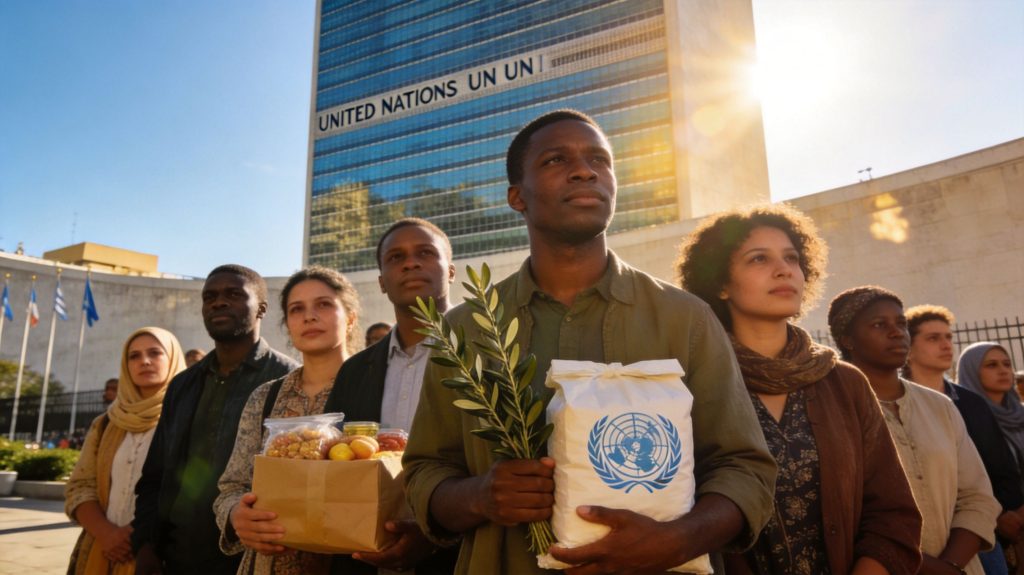
The UN’s dual role inside Iran
The UN’s operations present its greatest contradiction. Parts of the system provide humanitarian support and development coordination. Other parts investigate abuse, document repression, or condemn state conduct. Both functions are legitimate. Together, they create a difficult political balance.
The tension is visible in current reporting around Iran. An OHCHR-linked press release highlights a surge in executions to the highest level since 2015 and states that 10.8 million people need aid in Iran. The same body of reporting also references a UN Watch finding that only 5 of 87 rapporteurs condemned Iran’s repression of protests that killed thousands, after analyzing 54 experts, as noted in the OHCHR press material on Iran’s surge in repression.
Those facts matter because they show two realities at once. Humanitarian need is real. So is the perception that parts of the UN system respond unevenly to Iranian abuses.
Why selective attention changes outcomes
Selective attention is not a cosmetic problem. It alters incentives.
If Iranian officials believe some UN mechanisms will remain cautious, divided, or slow, then the reputational cost of repression falls. If Iranian civilians believe humanitarian presence will not be matched by clear advocacy on abuses, trust in international institutions erodes. And if outside governments see an inconsistent UN response, they become more likely to bypass multilateral channels and act through narrower coalitions.
That weakens everyone.
Consider the practical split inside the UN-Iran file:
- Humanitarian actors need access, continuity, and working relationships.
- Human rights mechanisms need independence, visibility, and pressure.
- Member states often want both outcomes, but don’t always defend both with equal force.
A UN system that feeds people but speaks softly about repression can preserve operations in the short term while losing credibility in the long term.
That is the hardest truth in united nations iran analysis. The system’s moral authority depends not only on whether it helps, but on whether it appears willing to name the source of harm with consistency.
Future Implications for Global Security and Energy Markets
Iran’s UN file will keep producing consequences outside the UN because its three pillars reinforce each other. Security disputes affect diplomacy. Diplomatic fragmentation affects human rights pressure. Humanitarian failure feeds instability. That instability then reaches shipping lanes and energy pricing.
A three-part feedback loop
The most underappreciated link is between humanitarian strain and maritime risk. UN funding shortfalls for humanitarian aid in Iran have been tied to instability in the Strait of Hormuz, through which 20% of global oil transits, and analysis cited in a public briefing argues that unrest linked to economic pressure can drive 5 to 7% spikes in Brent crude futures, according to this analysis of humanitarian shortfalls and Hormuz instability.
That is the feedback loop siloed reporting misses:
- Security pressure rises through nuclear disputes, monitoring fights, or sanctions threats.
- Domestic pressure intensifies as economic constraints and repression deepen social strain.
- Regional risk increases because Iran’s position gives internal instability external consequences.
For ongoing coverage of that broader risk picture, see Vanitiro’s energy market analysis.
What decision-makers should watch next
The most important question isn’t whether the UN will remain involved. It will. The question is whether UN mechanisms will act in ways that reinforce each other or cancel each other out.
Policymakers should watch for three signals:
- Coherence between oversight and diplomacy: Technical findings only deter if states turn them into a common political line.
- Consistency on rights and aid: Humanitarian work is stronger when it doesn’t require strategic silence.
- Translation into market expectations: Energy volatility often begins with legal and diplomatic cues before it shows up in tanker or price data.
The deeper lesson is simple. United nations iran is not a niche institutional subject. It is one of the clearest tests of whether international law, multilateral diplomacy, and humanitarian action can still operate as a single system under stress. When they do, escalation becomes easier to manage. When they don’t, the cost is paid far beyond Iran.
Vanitiro tracks the stories that sit between diplomacy, sanctions, conflict, and everyday economic fallout. If you want clear, source-grounded analysis on Iran, the UN, Hormuz risk, and the market consequences of geopolitical shocks, follow Vanitiro.